China Cuts Saudi Oil Orders as Hormuz Risks and Price War Intensify





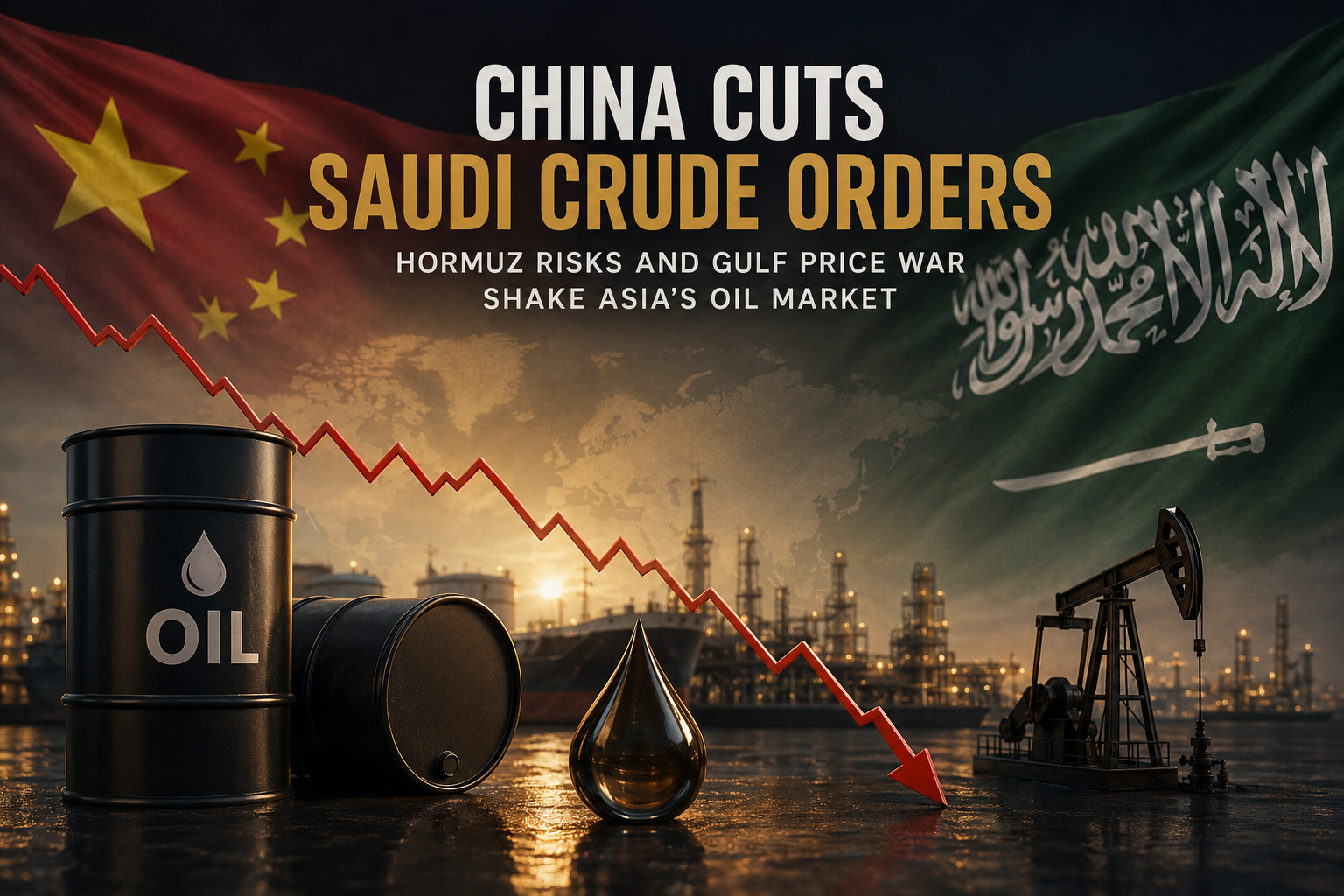
[China's Saudi Oil U-Turn Raises Fresh Questions for Global Energy Markets]
China Slashes Saudi Crude Orders as Hormuz Risks and Gulf Price War Reshape Asia's Oil Market
China's appetite for Saudi crude is cooling at a critical moment for global energy markets. As geopolitical uncertainty intensifies around the Strait of Hormuz and Gulf producers compete more aggressively for Asian buyers, Saudi Arabia is facing weaker demand from one of its largest customers despite cutting prices sharply.
The shift highlights how changing trade flows, refinery demand, and regional shipping risks are beginning to reshape crude oil purchases across Asia, with China increasingly weighing both price and supply security.
Key Highlights
- Chinese refiners are reducing August crude nominations from Saudi Arabia, with some buyers not requesting any term cargoes.
- Saudi crude allocations to China have fallen to 10–20 million barrels per month, well below last year's average of roughly 40 million barrels.
- Saudi Arabia recently announced its biggest price reduction for Asian customers in more than 20 years to defend market share.
- Growing competition from Gulf exporters and Strait of Hormuz shipping concerns are influencing Chinese buying decisions.
- Brent crude is trading near $87 per barrel, while WTI is around $80.80 per barrel amid renewed geopolitical tensions.
- What's Happening: Chinese Buyers Scale Back Saudi Crude Purchases
Saudi Arabia's oil exports to China are showing signs of weakening as several Chinese refiners trim their purchasing plans for August deliveries.
According to traders cited by Bloomberg, at least two Chinese refiners have decided not to nominate any Saudi term crude cargoes for August. Several other refiners are also reportedly waiting for provisional allocation volumes that have yet to be confirmed, reflecting softer demand for Saudi supply.
The development marks a significant shift in one of the world's most important oil trading relationships, especially as global crude prices remain elevated because of geopolitical risks.
Why China Is Pulling Back
The reduction in Saudi crude purchases appears to be driven by several overlapping factors rather than a single issue.
Since the conflict involving Iran began, Saudi Arabia has reportedly supplied China with between 10 million and 20 million barrels per month. That represents a steep decline compared with last year's average monthly deliveries of around 40 million barrels, indicating that Saudi allocations have fallen by roughly two to four times.
Market participants point to slowing fuel demand in China as one of the biggest reasons behind the decline. At the same time, Chinese refiners have access to more competitively priced crude from rival suppliers, allowing them to diversify purchases instead of relying heavily on Saudi barrels.
Logistical concerns linked to ongoing disruptions around the Strait of Hormuz have also become an increasingly important consideration for buyers seeking more predictable shipping routes.
Saudi Arabia's Price Cuts Signal a Fight for Asian Market Share
Saudi Arabia has responded aggressively in an effort to retain customers across Asia.
During the opening stages of the Iran conflict, Saudi Aramco had raised the premium on its long-term crude contracts for Asian buyers to record levels above benchmark pricing. However, the strategy has shifted dramatically.
Earlier this month, the kingdom announced its largest reduction in official selling prices for Asian customers in more than two decades, underscoring the growing pressure to remain competitive in the region.
For next month's deliveries, Saudi Arabia's flagship Arab Light crude will be priced at $1.50 per barrel below the Oman/Dubai benchmark, the pricing reference widely used for Gulf crude exports to Asia.
Such discounting is considered highly unusual for the world's largest crude oil exporter and illustrates the intensity of competition now emerging among Gulf suppliers.
Gulf Competition Heats Up
Saudi Arabia is no longer competing only on production volumes—it is increasingly battling rival exporters on pricing and logistics.
Several Gulf producers are reportedly offering even deeper discounts than Saudi Arabia while also shipping crude from export terminals located outside the Strait of Hormuz. Those alternative loading points reduce transportation risks and can lower freight costs for Asian refiners.
For buyers focused on both economics and supply security, these advantages have become increasingly attractive during periods of heightened regional instability.
As a result, Saudi Arabia faces growing pressure not only to offer competitive pricing but also to reassure customers about reliable deliveries.
The Strait of Hormuz Factor
Shipping security remains one of the biggest uncertainties facing global oil markets.
Saudi Arabia's primary export terminal at Ras Tanura relies on vessels passing through the Strait of Hormuz before reaching international markets. Any renewed escalation in the region could complicate exports from the kingdom and raise shipping costs.
By contrast, some competing Gulf exporters are able to load crude from facilities outside the Strait, reducing exposure to potential disruptions.
These logistical differences are becoming increasingly important as Asian refiners evaluate procurement strategies during periods of geopolitical tension.
Oil Prices Remain Elevated
The broader energy market continues to reflect concerns over Middle East stability.
Brent crude is currently trading at approximately $87 per barrel, while U.S. benchmark WTI is hovering around $80.80 per barrel. Both benchmarks have climbed sharply as traders monitor developments surrounding the Strait of Hormuz and assess the potential impact on global oil supplies.
Higher benchmark prices, combined with aggressive regional discounting, are creating a complex environment for both producers and buyers.
What Comes Next
China's reduced appetite for Saudi crude could become one of the defining themes of the third quarter if refinery demand remains subdued and Gulf producers continue competing aggressively for Asian market share.
Attention will now turn to whether Saudi Arabia introduces additional pricing adjustments, how rival Gulf exporters position their cargoes, and whether tensions around the Strait of Hormuz ease or escalate further. Those factors are likely to shape crude flows, freight economics, and oil prices throughout the remainder of the quarter.
More News

Carlex G-Stallion: One-Off AED 13 Million Mercedes-AMG G 63
Carlex Design has unveiled its spectacular one-off G-Stallion in Abu Dhabi, based on the Mercedes-AMG G 63 and priced at AED 13 million. With a diamond-dust finish, handcrafted aluminum roof and bespoke detailing, it is designed as a true collector’s piece.
01-Sep-2026 05:40 AM
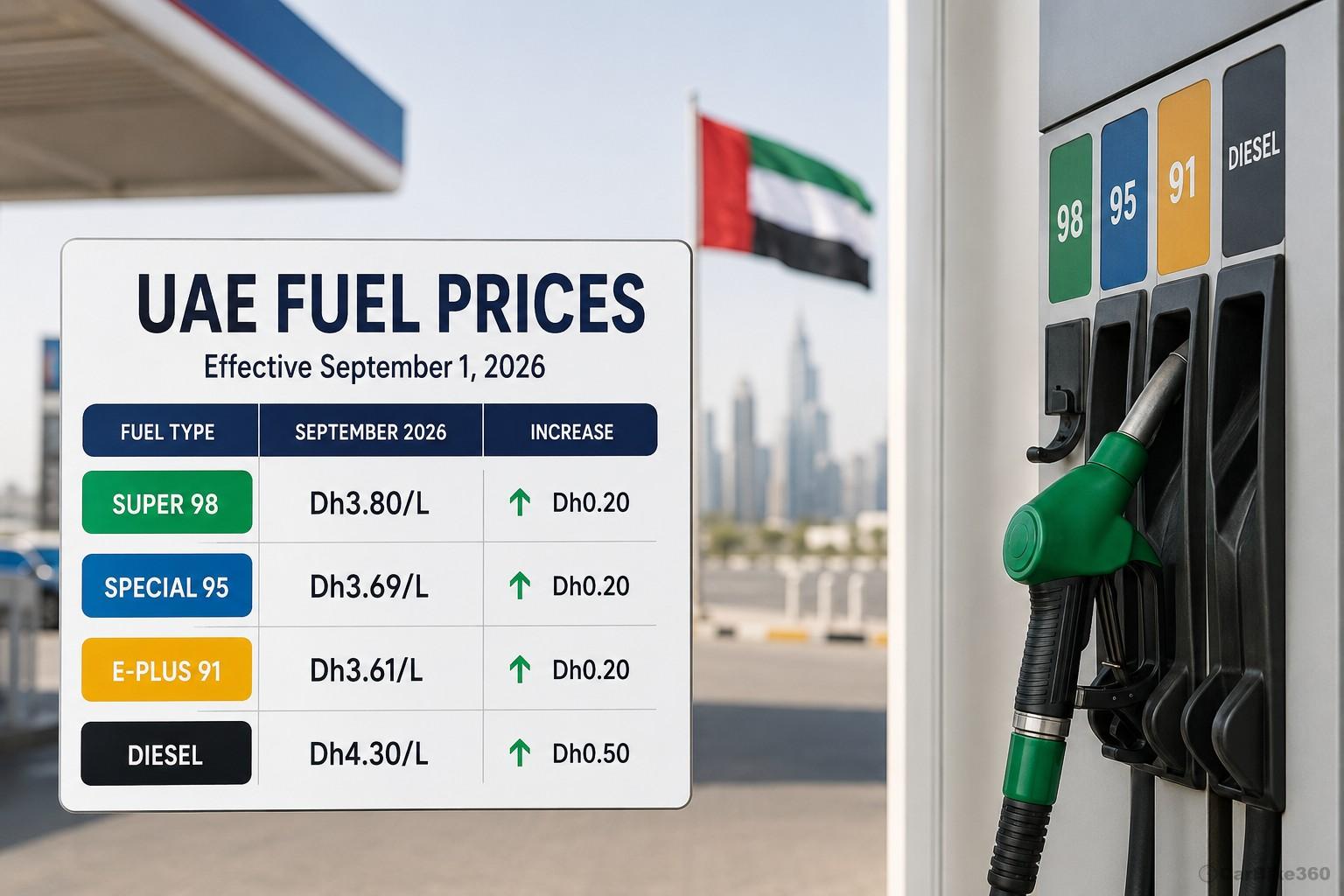
UAE Announces Fuel Price Increase for September 2026
The UAE has announced a fuel price increase for September 2026, effective from September 1. The rise follows previous monthly increases and is driven by global oil market trends. Residents are advised to monitor official updates.
31-Aug-2026 09:00 AM

Top 5 Best-Selling Cars in the GCC August 2026: Jimny Leads the Pack
August’s GCC car sales ranking highlights diverse buyer preferences, with the Suzuki Jimny, Nissan Patrol, Mercedes-Benz E-Class, Ford Ranger, and Toyota Prado leading the list. The ranking shows strong demand for affordability, off-road capability, luxury, utility, and resale value.
31-Aug-2026 06:50 AM
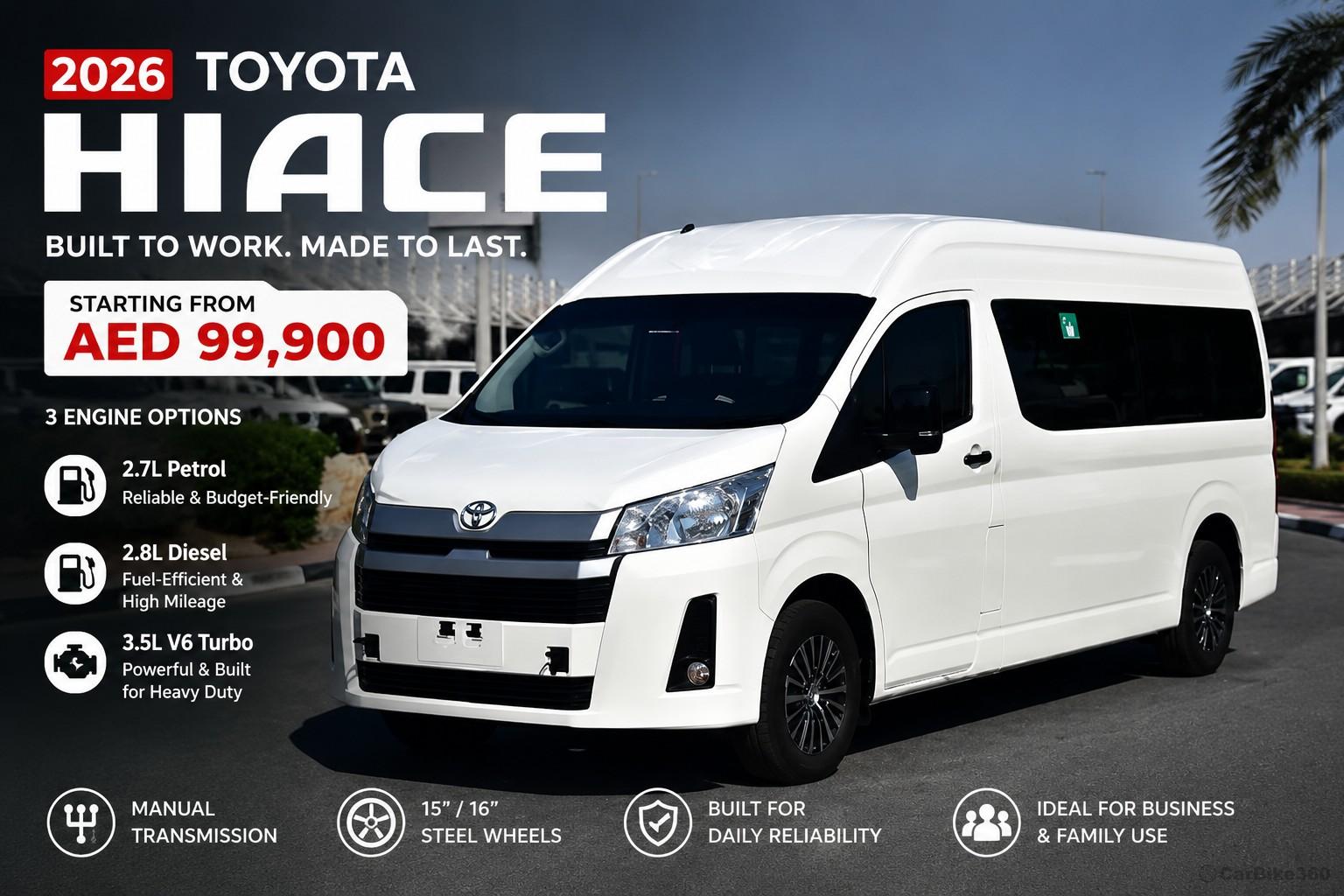
2026 Toyota HiAce Is Here in UAE — Price, Engines & Specs Revealed
The 2026 Toyota HiAce starts at AED 99,900 in the UAE, offering 2.7L petrol, 2.8L diesel and 3.5L V6 turbo engine options with manual transmissions.
31-Aug-2026 05:50 AM

10 Car Technologies UAE Buyers Should Understand Before Paying Extra
UAE car buyers must evaluate new technologies like AEB, adaptive cruise control, and EV charging features. Not all advanced systems are standard, and equipment varies by model and trim. Confirm feature availability before purchase.
27-Aug-2026 10:00 AM

Audi Breaks Cover in America: The 987-HP Nuvolari Redefines the Brand
Audi has unveiled the Nuvolari hybrid supercar in North America at Monterey Car Week, showcasing 987 hp, a 350 km/h-plus top speed and limited production of just 499 units.
27-Aug-2026 05:36 AM








Join Carbike360
Get Trending Updates


UAE’s Fastest Growing Vehicle Marketplace