9% Oil Price Spike Shakes Global Markets as Hormuz Tensions Return





[The Gulf's Most Critical Oil Route Is Back in Focus as Prices Skyrocket]
Oil Markets on Edge: Hormuz Tensions Push Crude to One-Month High
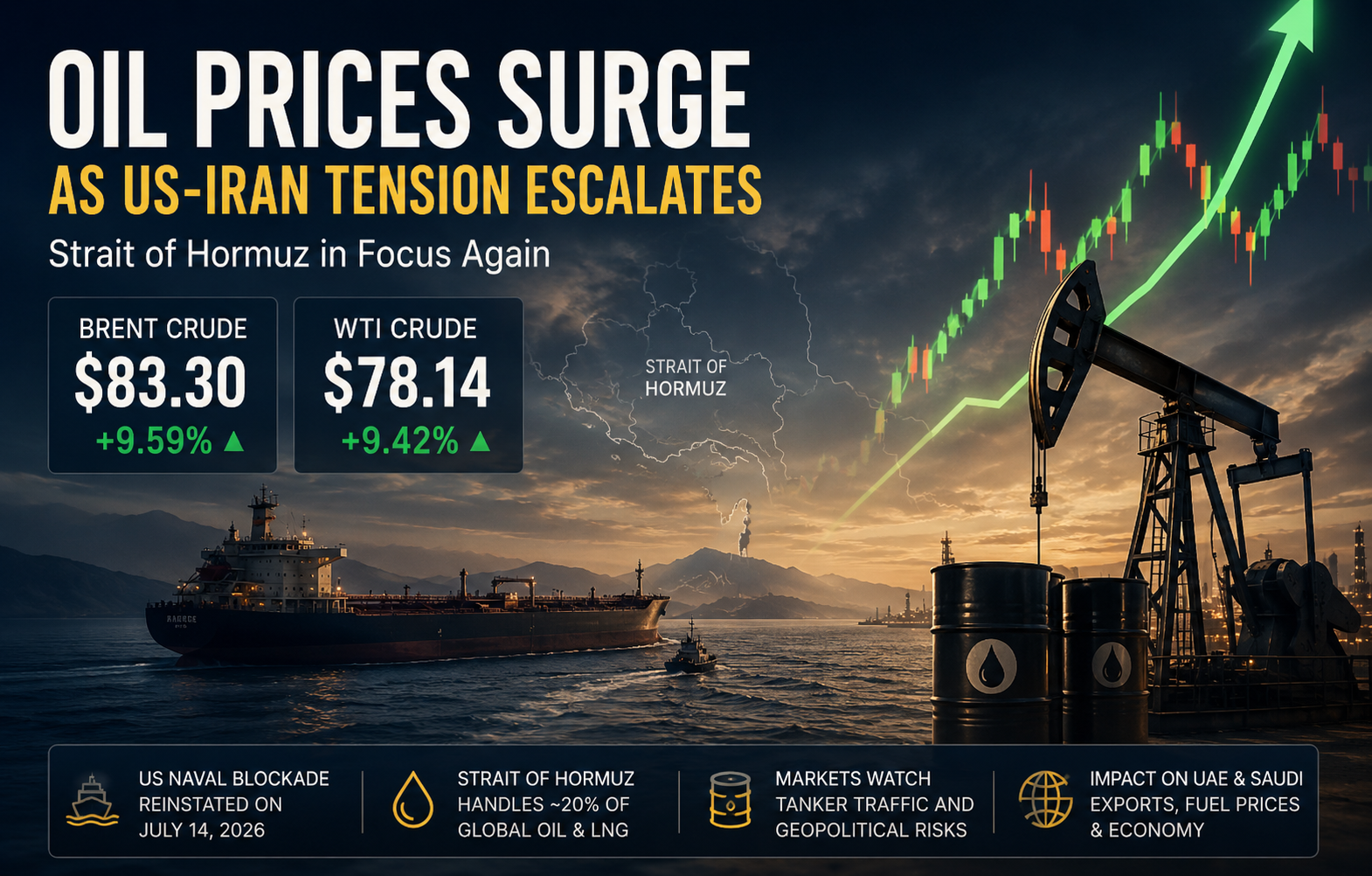
Global oil markets rallied sharply after renewed geopolitical tensions in the Gulf pushed investors to price in potential supply disruptions. Brent crude climbed 9.59% to $83.30 per barrel, while WTI gained 9.42% to $78.14, marking their strongest single-day dollar increases since April. Early Tuesday trading saw Brent near $84.06 and WTI around $79.25, both roughly 1% higher.
The move followed Washington's decision to restore its naval blockade on Iran, reigniting concerns over oil shipments through one of the world's most important energy corridors.
Key Highlights
- Oil Rally: Brent and WTI crude both surged over 9%, reaching one-month highs.
- Blockade Returns: The US will reinstate its naval blockade on Iran from 2000 GMT on July 14, 2026.
- Hormuz Risk: The Strait of Hormuz, responsible for around 20% of global oil and LNG flows, is again under pressure.
- UAE Impact: Higher crude prices could boost ADNOC revenues but increase pressure on UAE fuel costs and logistics.
- Saudi Outlook: Saudi Arabia may benefit from stronger oil revenues while relying on alternative export routes to reduce Hormuz exposure.
- Markets Watch: Investors are closely monitoring tanker traffic and geopolitical developments for the next price move.
US Reinstates Iran Naval Blockade
The US Navy-led Joint Maritime Information Center said the blockade will resume at 2000 GMT on July 14, 2026 (midnight UAE time), covering Iran's coastline, ports, oil terminals, and vessels of every flag. The measure had been suspended during the June ceasefire but returned after renewed military exchanges.
President Donald Trump also announced a 20% fee on cargo passing through the Strait of Hormuz. Iran rejected the move, saying it would resist any attempt by the US to control the waterway, while the UN's shipping agency stated there is no legal basis for mandatory transit fees.
Why the Strait of Hormuz Matters
Before fighting intensified in late February, the Strait of Hormuz carried around one-fifth of global daily oil and LNG supplies. Shipping traffic briefly recovered during June's ceasefire before slowing again as tensions resurfaced, raising fears of supply disruptions.
UAE and Saudi Arabia Face Different Challenges
For the UAE, higher crude prices generally strengthen government and ADNOC revenues. However, analysts note that consumers could eventually feel the impact through monthly UAE petrol prices, while logistics, aviation, and freight businesses in Dubai may face higher operating costs. The UAE's Fujairah pipeline and export infrastructure also provide a strategic route that can bypass part of Hormuz, reducing some export risk.
Saudi Arabia could also benefit from stronger oil revenues, although shipping and insurance costs may rise. The Kingdom's East-West pipeline to Yanbu offers an important alternative export route, while investors will watch Tadawul and Gulf markets for any sustained reaction.
Outlook
Market analysts say the combination of the renewed blockade, retaliatory attacks, and lower tanker movements has increased concerns about near-term oil availability. UBS strategist Giovanni Staunovo noted that inbound tanker numbers remain a critical indicator, with weaker flows likely to keep a geopolitical risk premium in crude prices.
If tensions ease, oil could retreat. However, any prolonged disruption around the Strait of Hormuz would keep global energy markets—and Gulf economies—on high alert.
More News

Carlex G-Stallion: One-Off AED 13 Million Mercedes-AMG G 63
Carlex Design has unveiled its spectacular one-off G-Stallion in Abu Dhabi, based on the Mercedes-AMG G 63 and priced at AED 13 million. With a diamond-dust finish, handcrafted aluminum roof and bespoke detailing, it is designed as a true collector’s piece.
01-Sep-2026 05:40 AM
UAE Announces Fuel Price Increase for September 2026
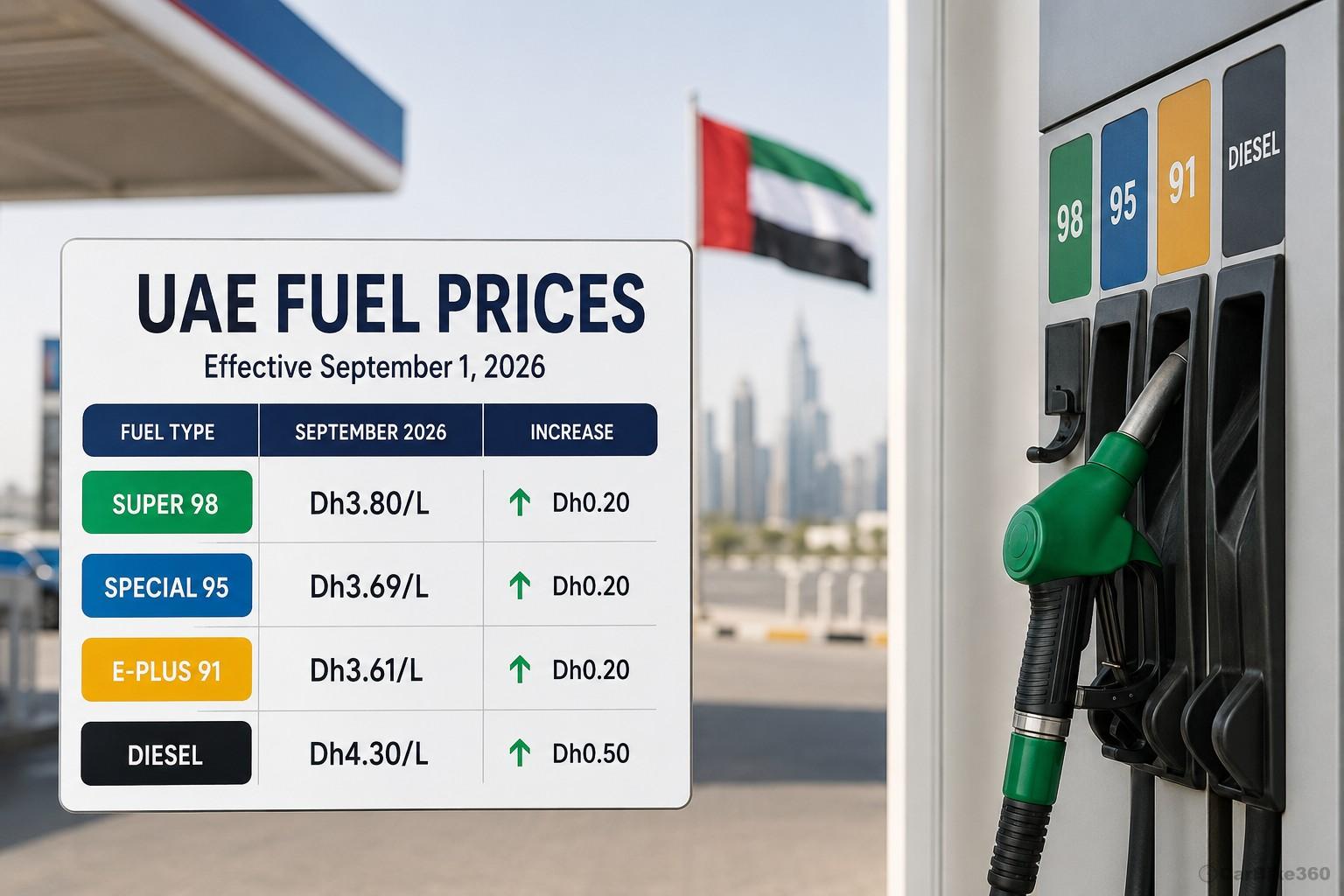
The UAE has announced a fuel price increase for September 2026, effective from September 1. The rise follows previous monthly increases and is driven by global oil market trends. Residents are advised to monitor official updates.
31-Aug-2026 09:00 AM

Top 5 Best-Selling Cars in the GCC August 2026: Jimny Leads the Pack
August’s GCC car sales ranking highlights diverse buyer preferences, with the Suzuki Jimny, Nissan Patrol, Mercedes-Benz E-Class, Ford Ranger, and Toyota Prado leading the list. The ranking shows strong demand for affordability, off-road capability, luxury, utility, and resale value.
31-Aug-2026 06:50 AM

2026 Toyota HiAce Is Here in UAE — Price, Engines & Specs Revealed
The 2026 Toyota HiAce starts at AED 99,900 in the UAE, offering 2.7L petrol, 2.8L diesel and 3.5L V6 turbo engine options with manual transmissions.
31-Aug-2026 05:50 AM

10 Car Technologies UAE Buyers Should Understand Before Paying Extra
UAE car buyers must evaluate new technologies like AEB, adaptive cruise control, and EV charging features. Not all advanced systems are standard, and equipment varies by model and trim. Confirm feature availability before purchase.
27-Aug-2026 10:00 AM

Audi Breaks Cover in America: The 987-HP Nuvolari Redefines the Brand
Audi has unveiled the Nuvolari hybrid supercar in North America at Monterey Car Week, showcasing 987 hp, a 350 km/h-plus top speed and limited production of just 499 units.
27-Aug-2026 05:36 AM






Join Carbike360
Get Trending Updates


UAE’s Fastest Growing Vehicle Marketplace