Saudi Arabia Signs EV Manufacturing Agreements with Ceer to Boost Vision 2030 Goals





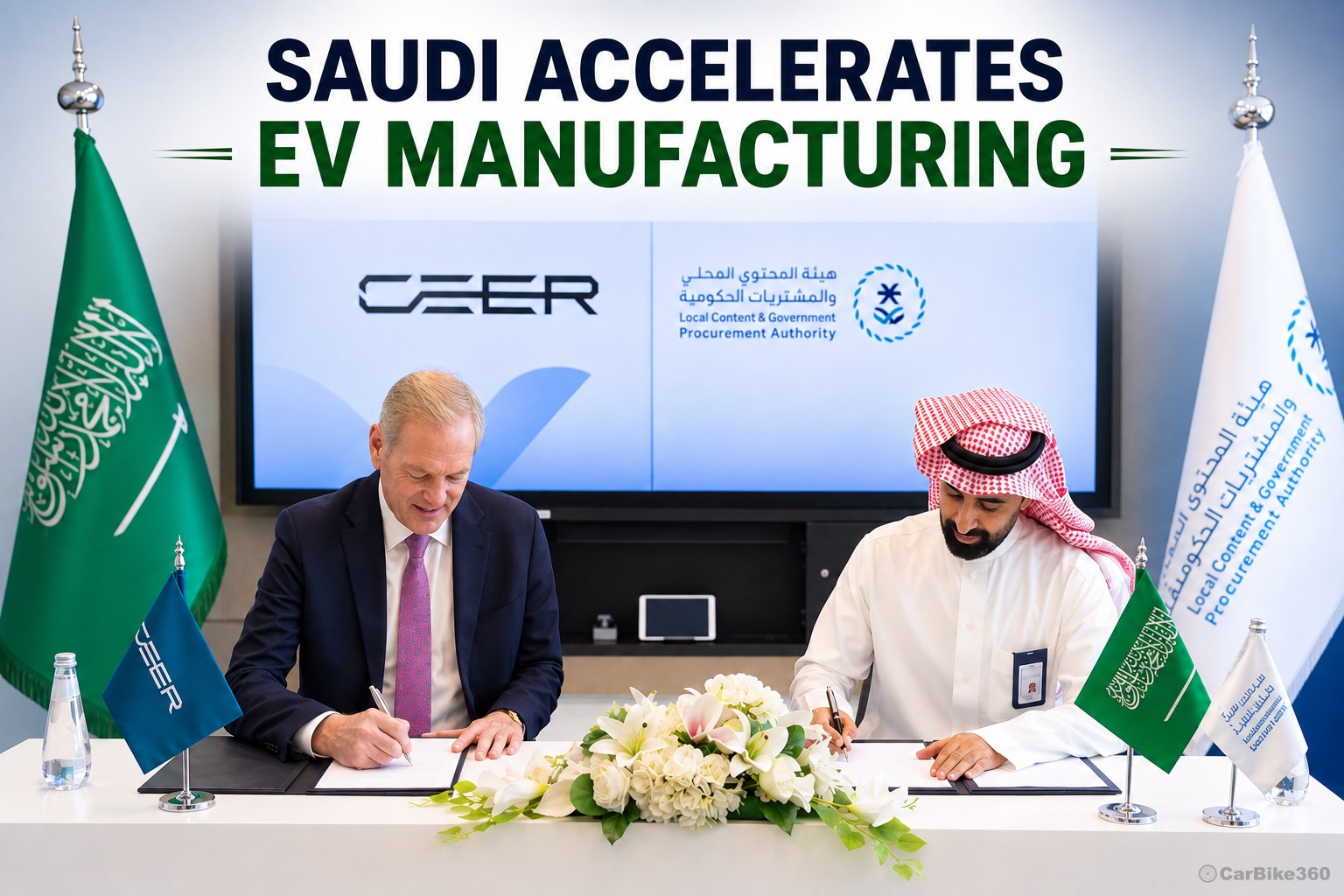
Saudi Arabia Signs Two Major Agreements with Ceer to Localize EV Manufacturing
Saudi Arabia has strengthened its ambitions to become a global electric vehicle (EV) manufacturing hub after the Local Content and Government Procurement Authority (LCGPA) signed two strategic agreements with Ceer National Automotive Co. The deals aim to accelerate the localization of EV manufacturing, promote technology transfer, and boost domestic industrial capabilities as part of the Kingdom's Vision 2030 strategy.
The agreements are expected to generate billions of riyals in economic value, create thousands of jobs, and position Ceer as a key player in Saudi Arabia's emerging automotive industry.
Key Highlights
- The LCGPA and Ceer signed two agreements to localize EV production and enable knowledge transfer inside Saudi Arabia
- In return, Ceer's vehicles will be added to the Kingdom's Mandatory List of National Products
- The deals are projected to add roughly SAR 9.2 billion (about $2.4 billion) to Saudi GDP over the next decade
- The agreements are expected to create more than 2,600 jobs
- Ceer separately aims to generate around 30,000 jobs by 2034, with Saudi nationals filling 80% of direct roles
- The initiative supports Saudi Vision 2030 and the Kingdom's broader industrial localization strategy
Saudi Arabia Expands Local EV Manufacturing
The agreements focus on localizing the production of electric sedans and SUVs while enabling knowledge transfer, advanced manufacturing, and engineering expertise within Saudi Arabia. The initiative represents another milestone in the Kingdom's plan to establish the country's first fully Saudi-designed, engineered, and manufactured electric vehicle.
As part of the agreement, Ceer's EV models will be included in Saudi Arabia's Mandatory List of National Products, giving locally manufactured vehicles priority in government procurement.
This move is expected to increase demand for domestically built vehicles while encouraging greater investment across the country's automotive supply chain.
Mandatory National Products List to Boost Domestic Industry
Adding Ceer's vehicles to the Mandatory List of National Products is expected to strengthen Saudi Arabia's industrial ecosystem by directing government purchasing toward locally manufactured products.
The initiative is designed to:
-
Increase local manufacturing capabilities
-
Encourage investment in domestic suppliers
-
Improve competitiveness of Saudi-made products
-
Develop skilled Saudi talent
-
Reduce dependence on imports
-
Strengthen the national automotive supply chain
These objectives align closely with Saudi Arabia's Vision 2030 economic diversification strategy, which seeks to reduce reliance on oil by expanding advanced manufacturing industries.
Expected Economic Impact
According to the LCGPA, the agreements are projected to deliver significant long-term economic benefits.
Economic Benefits at a Glance
Metric | Expected Impact |
GDP Contribution | SAR 9.2 billion over 10 years |
Employment | More than 2,600 new jobs |
Industrial Growth | Stronger local supply chains |
Technology Transfer | Advanced automotive manufacturing expertise |
Local Content | Increased domestic sourcing and production |
Officials described the automotive sector as one of the Kingdom's strategic industries, emphasizing that local manufacturing will help build resilient supply chains while improving Saudi Arabia's industrial competitiveness.
Ceer's Long-Term Vision
Ceer sees the agreements as a major milestone in building a fully integrated automotive ecosystem inside Saudi Arabia.
Rather than assembling imported components, the company plans to localize engineering, research, manufacturing, and technology development to establish a sustainable domestic EV industry.
By 2034, Ceer aims to achieve:
Ceer 2034 Targets | Goal |
Total Jobs | Approximately 30,000 |
Direct Jobs | Around 6,500 |
Indirect Jobs | Around 23,500 |
Saudi Employment | 80% of direct positions |
GDP Contribution | SAR 30 billion |
Local Content | 45% across vehicle production |
These targets highlight Ceer's ambition to become one of the key contributors to Saudi Arabia's industrial transformation.
Supporting Saudi Arabia's National Industrial Strategy
The agreements form part of the Industrial Localization and Knowledge Transfer Program, led by the LCGPA. The program encourages manufacturers to establish production facilities and transfer advanced technologies into Saudi Arabia in exchange for strategic incentives.
The initiative focuses on:
-
Building high-value manufacturing industries
-
Increasing local content across sectors
-
Expanding industrial investment
-
Creating skilled employment opportunities
-
Enhancing technology transfer
-
Strengthening long-term economic sustainability
Why These Agreements Matter
Saudi Arabia is increasingly using government procurement and localization policies to attract investment into advanced manufacturing sectors, particularly electric mobility.
By linking procurement opportunities to local production commitments, the Kingdom is encouraging automakers to establish genuine manufacturing operations instead of relying solely on imported vehicles.
If Ceer successfully achieves its production and localization targets, the company could become a cornerstone of Saudi Arabia's rapidly expanding EV ecosystem, complementing the Kingdom's ongoing investments in charging infrastructure, battery technologies, and critical minerals processing.
As global demand for electric vehicles continues to grow, these agreements represent another significant step toward making Saudi Arabia one of the Middle East's leading EV manufacturing and innovation hubs.
More News

Carlex G-Stallion: One-Off AED 13 Million Mercedes-AMG G 63
Carlex Design has unveiled its spectacular one-off G-Stallion in Abu Dhabi, based on the Mercedes-AMG G 63 and priced at AED 13 million. With a diamond-dust finish, handcrafted aluminum roof and bespoke detailing, it is designed as a true collector’s piece.
01-Sep-2026 05:40 AM
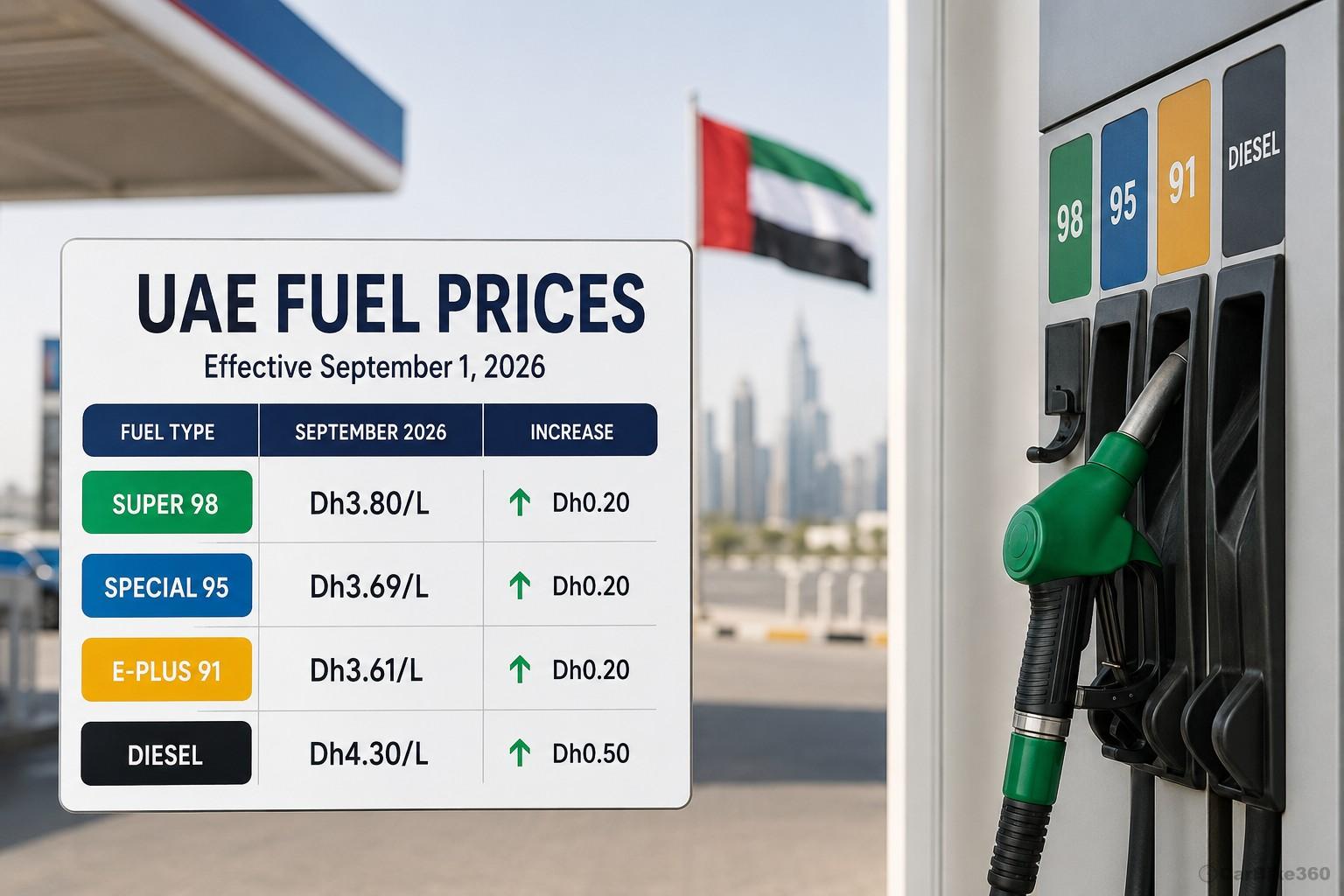
UAE Announces Fuel Price Increase for September 2026
The UAE has announced a fuel price increase for September 2026, effective from September 1. The rise follows previous monthly increases and is driven by global oil market trends. Residents are advised to monitor official updates.
31-Aug-2026 09:00 AM
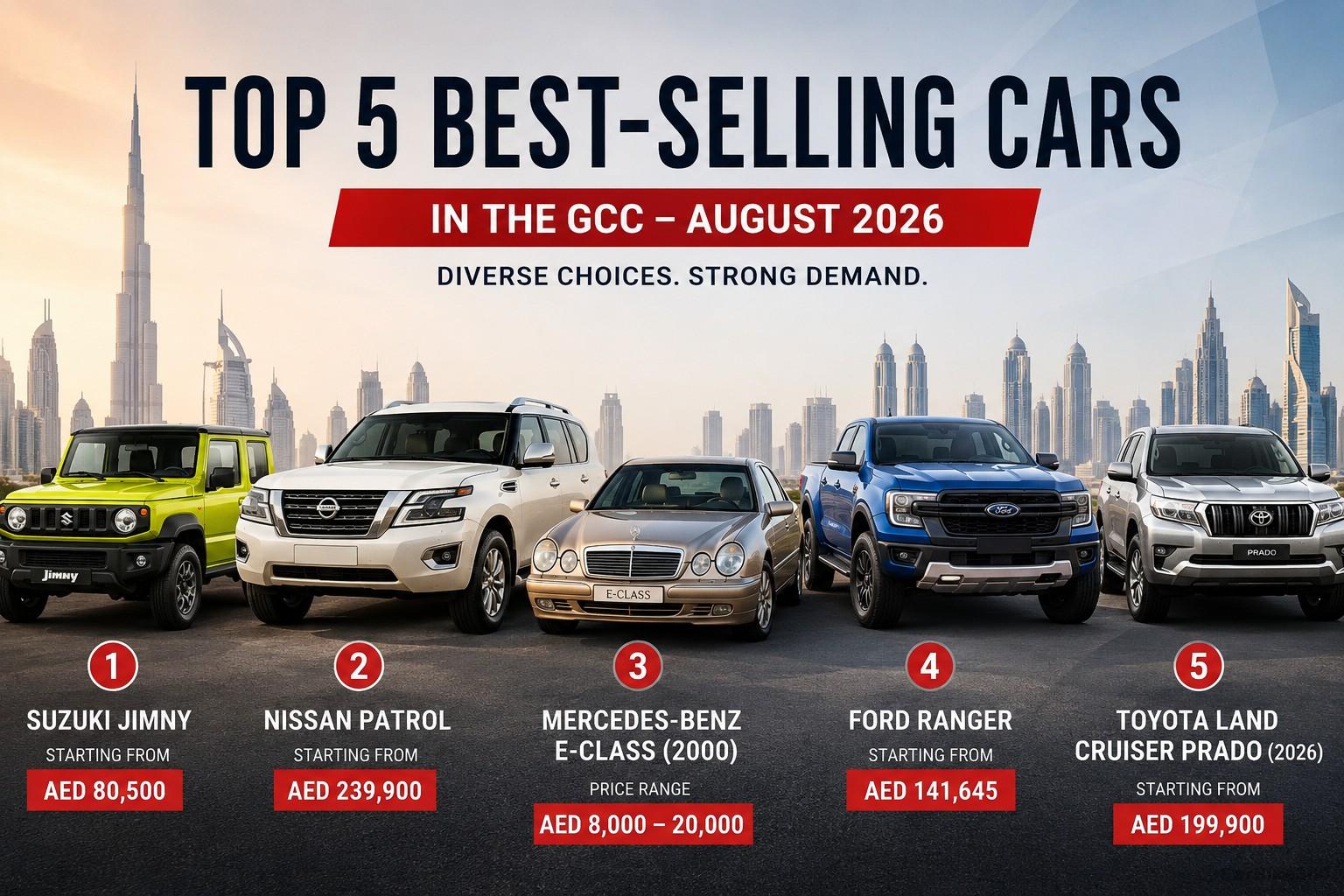
Top 5 Best-Selling Cars in the GCC August 2026: Jimny Leads the Pack
August’s GCC car sales ranking highlights diverse buyer preferences, with the Suzuki Jimny, Nissan Patrol, Mercedes-Benz E-Class, Ford Ranger, and Toyota Prado leading the list. The ranking shows strong demand for affordability, off-road capability, luxury, utility, and resale value.
31-Aug-2026 06:50 AM
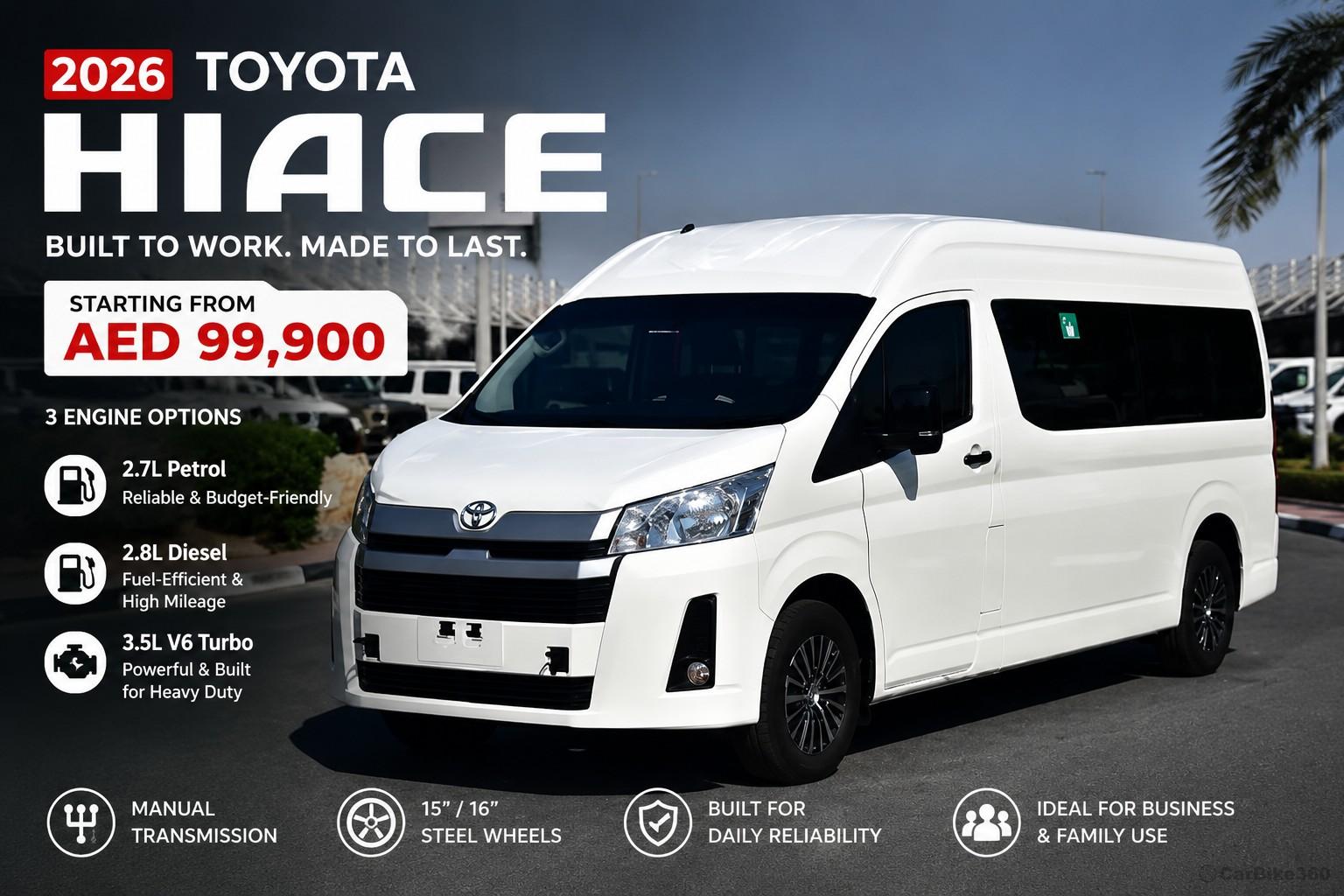
2026 Toyota HiAce Is Here in UAE — Price, Engines & Specs Revealed
The 2026 Toyota HiAce starts at AED 99,900 in the UAE, offering 2.7L petrol, 2.8L diesel and 3.5L V6 turbo engine options with manual transmissions.
31-Aug-2026 05:50 AM

10 Car Technologies UAE Buyers Should Understand Before Paying Extra
UAE car buyers must evaluate new technologies like AEB, adaptive cruise control, and EV charging features. Not all advanced systems are standard, and equipment varies by model and trim. Confirm feature availability before purchase.
27-Aug-2026 10:00 AM
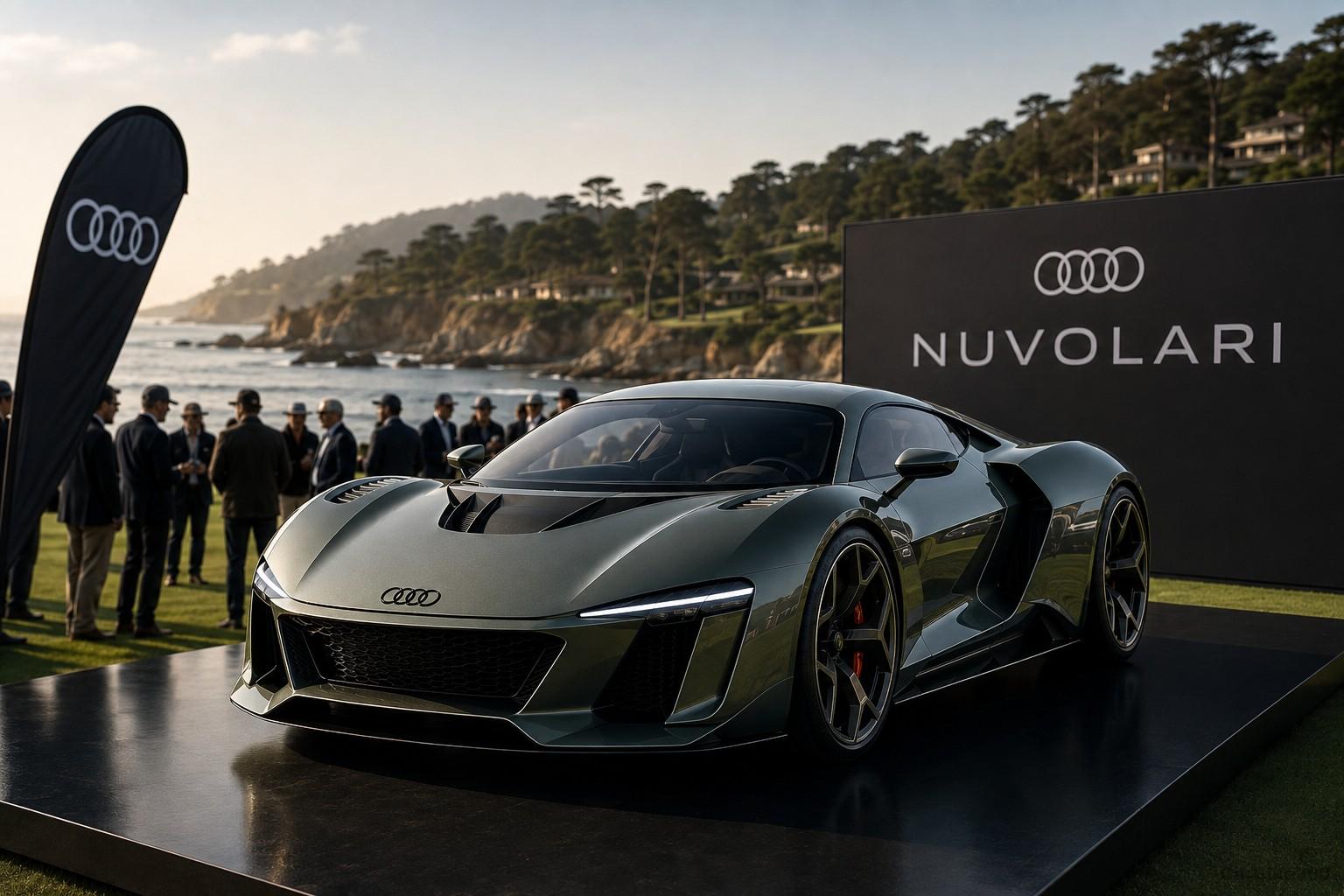
Audi Breaks Cover in America: The 987-HP Nuvolari Redefines the Brand
Audi has unveiled the Nuvolari hybrid supercar in North America at Monterey Car Week, showcasing 987 hp, a 350 km/h-plus top speed and limited production of just 499 units.
27-Aug-2026 05:36 AM




Join Carbike360
Get Trending Updates


UAE’s Fastest Growing Vehicle Marketplace