Saudi Arabia Pumps 34M Barrels Through Hormuz Despite Shipping Slump





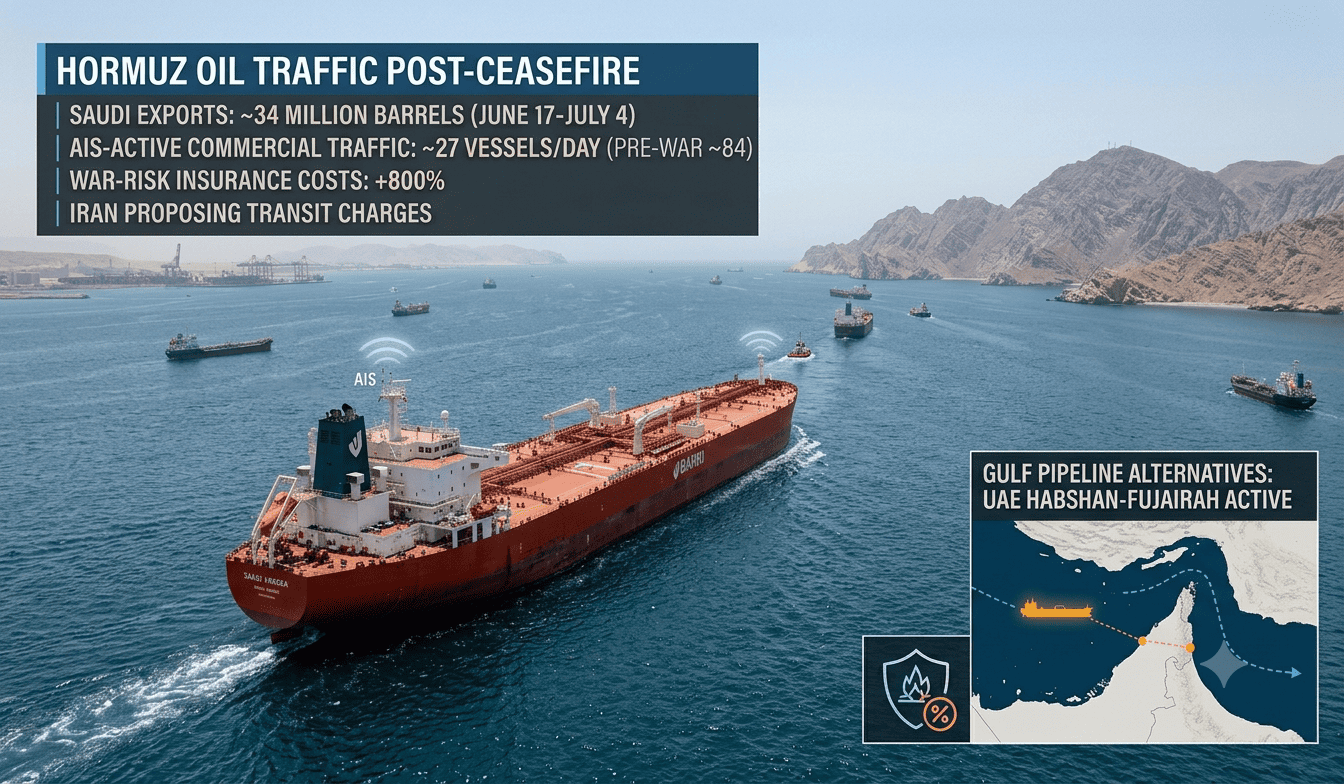
[Saudi Oil Exports Surge as Hormuz Traffic Stays at Crisis Levels]
Saudi Arabia Ships 34M Barrels Through Hormuz Despite Low Tanker Traffic
Key Highlights
- Saudi Arabia exported around 34 million barrels of crude through the Strait of Hormuz after the June 17 ceasefire.
- Commercial vessel movements remain at only one-third of pre-war levels despite easing regional tensions.
- High war-risk insurance costs continue discouraging independent tanker operators.
- Saudi Arabia and the UAE are increasingly relying on pipeline infrastructure that bypasses Hormuz.
- Iran plans to introduce service-related charges for vessels using the strategic waterway.
Saudi Arabia has rapidly increased crude shipments through the Strait of Hormuz following the June 17, 2026 ceasefire, highlighting the kingdom's efforts to restore export volumes despite persistent shipping disruptions. Cargo-tracking data shows oil continues to flow, but commercial tanker activity has yet to recover, reflecting ongoing security concerns and elevated transportation costs across one of the world's most important energy corridors.
How Much Oil Is Actually Moving Through Hormuz
According to Kpler cargo-tracking data, Saudi Arabia has exported roughly 34 million barrels of crude oil through the Strait of Hormuz since the ceasefire took effect on June 17.
While export volumes have climbed significantly, shipping data paints a different picture. Figures from IMF PortWatch indicate that only around 27 commercial vessels per day have been transiting the waterway with active Automatic Identification System (AIS) signals. Before the conflict, daily commercial traffic averaged approximately 84 vessel crossings, meaning activity remains close to one-third of normal levels.
The slowdown persisted into early July. On July 4, only 25 vessels crossed the strait while broadcasting active AIS signals.
Why Tanker Traffic Remains Thin Despite the Ceasefire
Although military tensions have eased, many commercial shipping companies remain cautious about returning to the region.
According to Bloomberg, four outbound oil tankers reportedly reversed course after receiving radio warnings from Iran's Islamic Revolutionary Guard Corps (IRGC). Such incidents continue to reinforce security concerns among private shipping operators.
Insurance remains another major obstacle. Independent tanker companies are still paying war-risk insurance premiums that are roughly eight times higher than before the conflict, significantly increasing transportation costs.
The "Dark Fleet" Factor — Sovereign Insurance & AIS Blackouts
Despite weak commercial shipping numbers, oil exports continue because a substantial share of Gulf crude is being transported by state-backed fleets operating under sovereign insurance coverage.
In addition, some vessels are limiting or disabling their AIS transmissions while operating in sensitive waters, making actual tanker activity higher than publicly visible AIS tracking suggests. This "dark fleet" activity means official vessel counts likely underestimate total crude movements through the Strait of Hormuz.
Gulf Producers' Pipeline Alternatives to Hormuz
Regional producers are also reducing their dependence on the strategic chokepoint by expanding alternative export routes.
Saudi Arabia continues to utilize its East-West Pipeline, allowing crude to reach terminals on the Red Sea without passing through Hormuz. Meanwhile, the United Arab Emirates is relying on the Habshan-Fujairah pipeline, providing direct access to the Gulf of Oman.
The UAE has also accelerated oil production after leaving OPEC and OPEC+, while expanding crude sales to Asian buyers. Together with Saudi Arabia's higher post-ceasefire exports, these strategies are strengthening Gulf supply flexibility.
Iran's New Fee Plans for the Strait
Iran is preparing to introduce charges for services provided to vessels navigating the Strait of Hormuz.
According to Iranian Ambassador Abdolreza Rahmani Fazli, the proposal is not designed as a transit toll. Instead, vessels would pay for services associated with using the waterway. He also indicated that countries considered friendly to Iran, including China, would receive special consideration under the proposed framework.
What This Means for Global Oil Supply and Prices
The latest shipping trends suggest that physical oil supply from the Gulf is recovering faster than commercial tanker confidence.
State-backed shipping fleets, sovereign insurance support, and alternative pipeline infrastructure are allowing Saudi Arabia and the UAE to maintain exports despite subdued commercial traffic. However, elevated insurance costs, geopolitical uncertainty, and Iran's evolving policies toward Hormuz continue to pose risks for global energy markets.
If commercial shipping gradually returns, transportation costs could ease and improve supply chain efficiency. Until then, global oil prices are likely to remain sensitive to any disruption affecting the Strait of Hormuz, one of the world's most strategically important energy routes.
More News

Carlex G-Stallion: One-Off AED 13 Million Mercedes-AMG G 63
Carlex Design has unveiled its spectacular one-off G-Stallion in Abu Dhabi, based on the Mercedes-AMG G 63 and priced at AED 13 million. With a diamond-dust finish, handcrafted aluminum roof and bespoke detailing, it is designed as a true collector’s piece.
01-Sep-2026 05:40 AM
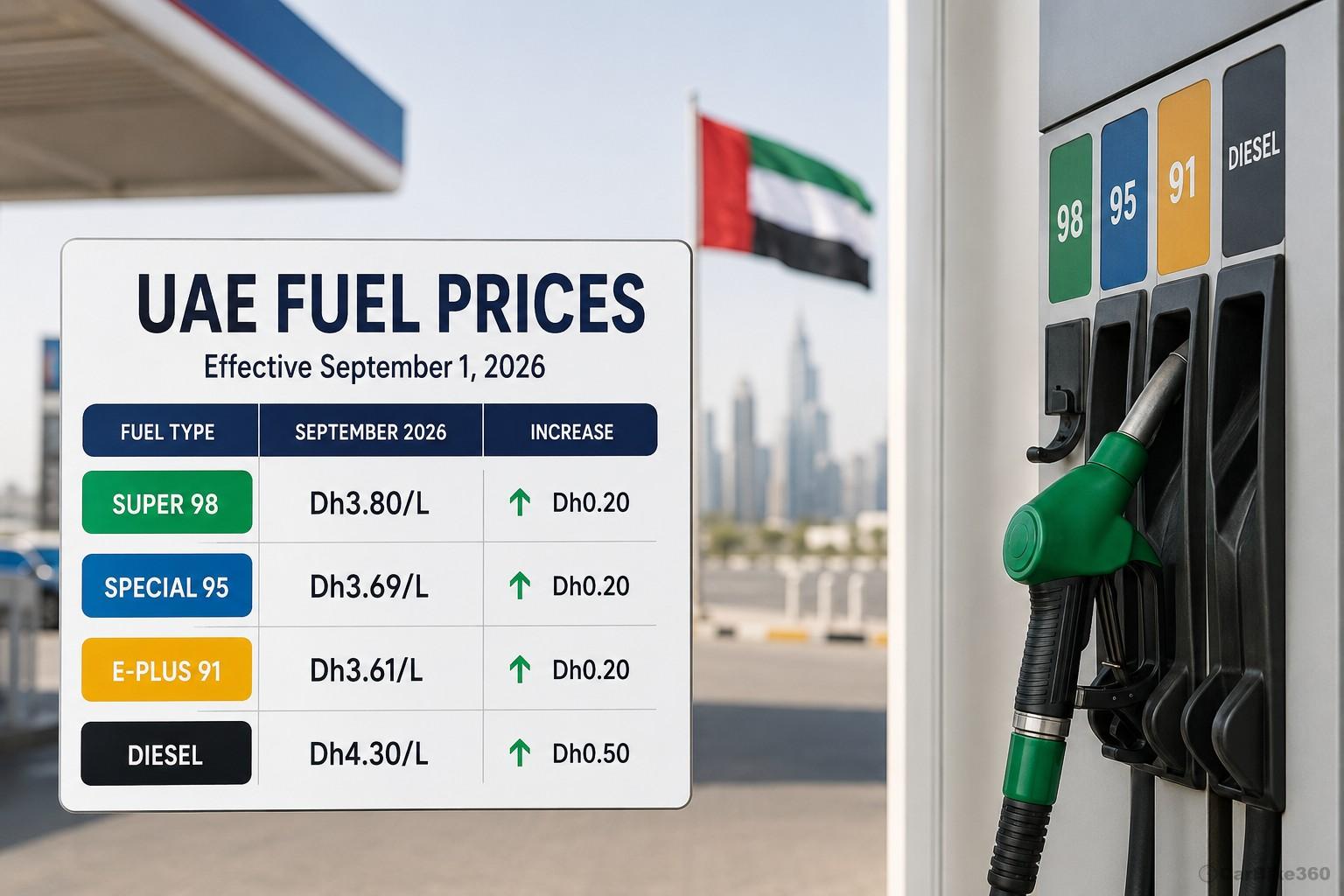
UAE Announces Fuel Price Increase for September 2026
The UAE has announced a fuel price increase for September 2026, effective from September 1. The rise follows previous monthly increases and is driven by global oil market trends. Residents are advised to monitor official updates.
31-Aug-2026 09:00 AM

Top 5 Best-Selling Cars in the GCC August 2026: Jimny Leads the Pack
August’s GCC car sales ranking highlights diverse buyer preferences, with the Suzuki Jimny, Nissan Patrol, Mercedes-Benz E-Class, Ford Ranger, and Toyota Prado leading the list. The ranking shows strong demand for affordability, off-road capability, luxury, utility, and resale value.
31-Aug-2026 06:50 AM

2026 Toyota HiAce Is Here in UAE — Price, Engines & Specs Revealed
The 2026 Toyota HiAce starts at AED 99,900 in the UAE, offering 2.7L petrol, 2.8L diesel and 3.5L V6 turbo engine options with manual transmissions.
31-Aug-2026 05:50 AM

10 Car Technologies UAE Buyers Should Understand Before Paying Extra
UAE car buyers must evaluate new technologies like AEB, adaptive cruise control, and EV charging features. Not all advanced systems are standard, and equipment varies by model and trim. Confirm feature availability before purchase.
27-Aug-2026 10:00 AM

Audi Breaks Cover in America: The 987-HP Nuvolari Redefines the Brand
Audi has unveiled the Nuvolari hybrid supercar in North America at Monterey Car Week, showcasing 987 hp, a 350 km/h-plus top speed and limited production of just 499 units.
27-Aug-2026 05:36 AM









Join Carbike360
Get Trending Updates


UAE’s Fastest Growing Vehicle Marketplace