Gordon Murray: Iconic Automotive Engineer and Designer






Gordon Murray is a figure closely associated with inventive and exacting engineering. He is recognized for his steadfast dedication to challenging the limits of automotive design. This piece explores the life, professional journey, and enduring influence of the visionary engineer, Gordon Murray, from his initial experiences in Formula One to his contributions to the continuously expanding supercar sector.
Early Life
Familiar with speed and racing from a young age, Gordon Murray was born on June 18, 1946, in Durban, South Africa. His early exposure to the racing world came through his father, a former motorcycle racer who eventually ventured into the preparation of race cars.

Gordon Murray's foray into the realm of automotive engineering commenced during his early years. Raised in South Africa, he demonstrated an early flair for mechanics and engineering. His enthusiasm for cars and racing ultimately guided him to pursue mechanical engineering studies at Natal Technical College.
In 1967, Gordon Murray constructed his race car, the IGM Ford, and actively participated in the South African National Class for a few years. Before long, Murray's skills garnered recognition within the motorsport community.
Formula One Entry & Dominance
In pursuit of greater opportunities, Murray relocated to England in 1969. Subsequently, he assumed the role of a designer with the Brabham Formula One team. This marked the commencement of a highly productive phase in his career, during which he significantly contributed to the team's achievements.

Teaming up with Brabham, Gordon Murray introduced groundbreaking ideas, notably unveiling the BT46B "fan car" in 1978. This ground-effect vehicle, featuring a rear-mounted fan, produced substantial downforce and played a key role in racing legend Niki Lauda's triumph at the Swedish Grand Prix.
Transition To The Mclaren Formula One Team
Despite its controversial nature and subsequent prohibition, the fan car demonstrated Gordon Murray's readiness to venture into unexplored territories and question established norms. Throughout his time at Brabham, Murray significantly contributed to the design of championship-winning cars. His achievements with the Brabham team garnered him recognition and established him as one of the most accomplished engineers in Formula One.

Gordon Murray transitioned to the McLaren Formula One team in 1986, taking on the role of technical director. His creative thinking and technical expertise resulted in the creation of the exceptionally fast McLaren MP4/4. Piloted by the legendary Ayrton Senna, this car went on to secure victory in 15 out of the 16 races during the 1988 season, ultimately clinching the championship.
The Genesis Of Mclaren Cars
Presently, McLaren is renowned for its meticulously crafted and exceptionally high-speed vehicles. Yet, the origins of McLaren Cars had humble beginnings. The idea of creating a road-worthy supercar emerged during a conversation at an airport while waiting for a flight after a Formula One race. This conversation eventually gave rise to the establishment of McLaren Cars and the creation of its inaugural vehicle, the iconic McLaren F1.

Debuted in 1992, the McLaren F1 stood out as an engineering marvel, showcasing a centrally positioned driver's seat, a gold-accented engine bay, and an impressive top speed of 391 km/h. This achievement secured its status as the world's fastest naturally aspirated production car, a record it maintained for a remarkable 24 years!
The Mclaren F1 Legacy
More than just a high-performance marvel, the McLaren F1 served as a testament to Gordon Murray's commitment to unwavering excellence. Emphasizing lightweight construction, aerodynamics, and inventive design, the F1 emerged as an iconic symbol of outstanding automotive engineering.

Murray's meticulous focus on detail and relentless pursuit of perfection earned him widespread acclaim, solidifying his position as a visionary in the automotive realm. Moving beyond the racetrack, Murray continued to delve into pioneering concepts, exemplified by projects such as the McLaren P1.
Gordon Murray Design
Established in 2007, Gordon Murray founded Gordon Murray Design, a company committed to reshaping the fundamentals of automotive design. The company's emphasis extended beyond high-performance supercars to encompass sustainable and inventive transportation solutions. Among the noteworthy innovations from Gordon Murray's Design is the T.25 city car.

Unveiled in 2010, the T.25 represented a compact and highly efficient city car specifically engineered to tackle the complexities of urban mobility. By incorporating inventive packaging, lightweight materials, and modular components, the T.25 aspired to establish novel benchmarks for efficiency and environmental sustainability. The design mirrored Murray's conviction that the evolution of automotive transportation demanded a departure from conventional norms.
The GMA T.50: Yet Another Gordon Murray Masterpiece
In 2020, Gordon Murray once more drew the automotive world's focus by introducing the T.50 supercar. Termed as the spiritual heir to the McLaren F1, the T.50 represents Murray's concept of the ultimate driver-centric supercar. Every facet of the T.50, spanning its aerodynamics to its V12 engine, illustrates Murray's unwavering dedication to excellence and innovation.

Incorporating a fan-assisted aerodynamics system reminiscent of Murray's design for Brabham in the 1970s, the T.50 boasts an advanced system that elevates downforce, cornering stability, and overall performance. Featuring a high-revving, naturally aspirated V12 engine from Cosworth, a manual gearbox, and a central driving position, the T.50 serves as both a tribute to the purity of driving and a testament to Murray's steadfast commitment to an unparalleled driving experience.
GMA T.33 Upcoming Cars
In 2022, Gordon Murray revealed plans for the T.33 supercar, utilizing the same engine as the T.50 but constructed on an entirely fresh platform. This novel platform is set to serve as the foundation for upcoming vehicles from Gordon Murray Automotive.

Gordon Murray's remarkable career, spanning Formula One triumphs, revolutionary designs at McLaren, and contributions to sustainable transportation, mirrors a lifelong commitment to automotive brilliance. His visionary approach has not only influenced iconic supercars like the McLaren F1 and T.50 but has also laid the groundwork for a more sustainable and innovative future in the automotive industry.
In the face of global endeavors toward environmental sustainability and the transition to electric mobility, Gordon Murray serves as a guiding influence, motivating both engineers and enthusiasts to strive for unprecedented achievements in automotive design and technology.
Also Read: 7 Unexpected Car Notifications Commonly Encountered in the UAE
More Articles
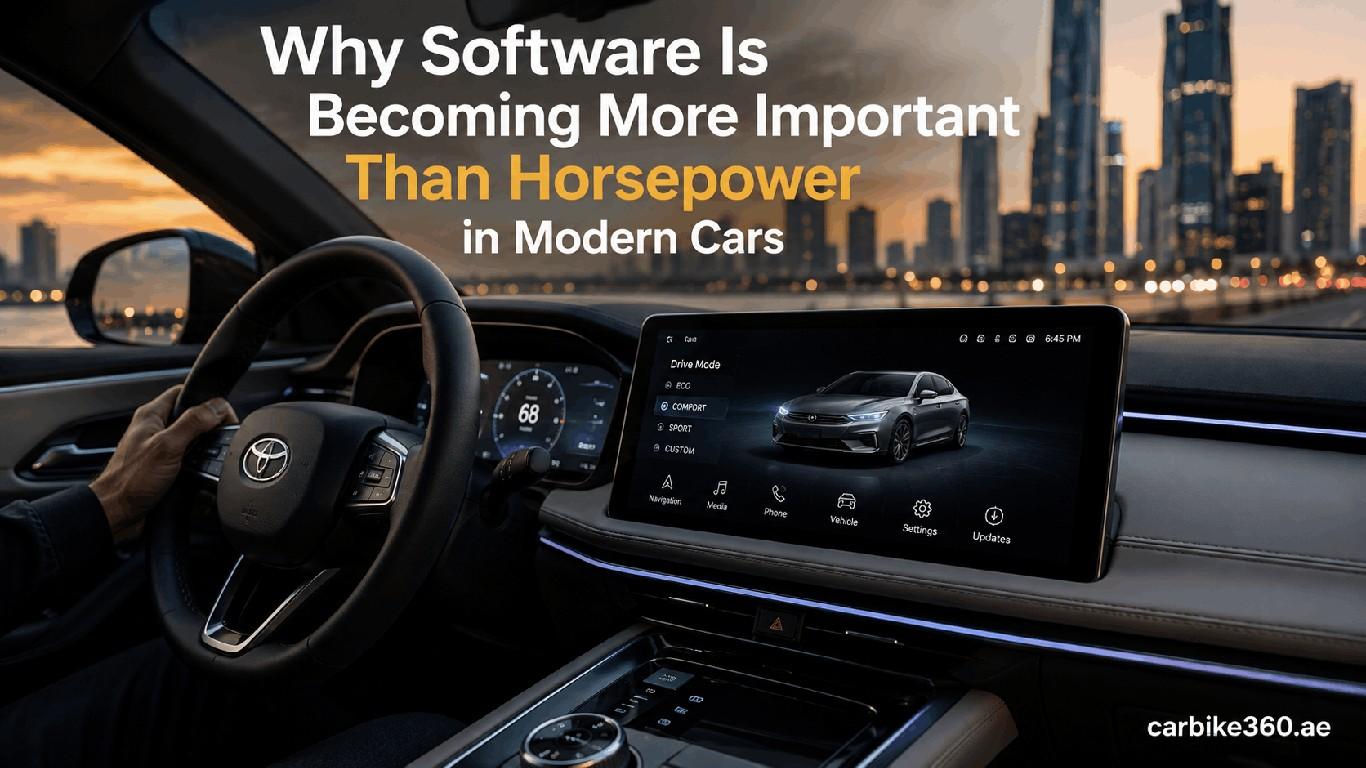
Why Software Is Becoming More Important Than Horsepower in Modern Cars
Discover why software is transforming the automotive industry in 2026. Learn how AI, connected features, over-the-air updates, and software-defined vehicles are becoming more important than horsepower.
12-Aug-2026 01:12 PM

Most Fuel-Efficient SUVs Available in UAE Today: Top Picks for 2026
Discover the most fuel-efficient SUVs available in the UAE in 2026. Compare hybrid and petrol models including Toyota RAV4 Hybrid, Corolla Cross Hybrid, Nissan Kicks, Hyundai Creta, Kia Seltos, and more.
11-Aug-2026 12:58 PM

Honda CR-V Saudi Arabia: Why Thousands of Families Are Choosing It in 2026
The 2026 Honda CR-V combines spacious seating, advanced safety, efficient performance, and premium comfort, making it one of the most practical family SUVs available in Saudi Arabia.
28-Jul-2026 06:06 AM
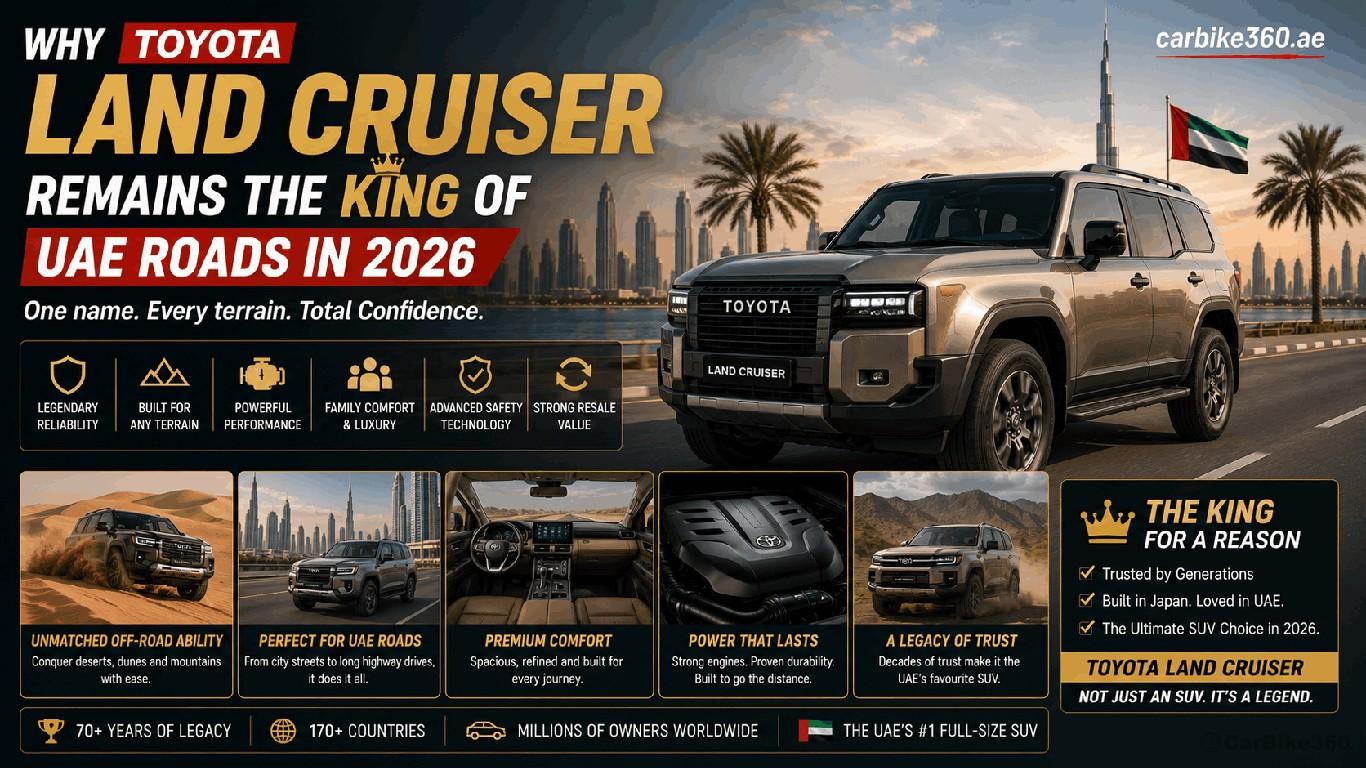
Why Toyota Land Cruiser Remains the King of UAE Roads in 2026
Discover why the Toyota Land Cruiser continues to dominate UAE roads in 2026. Explore its reliability, off-road capability, family-friendly features, resale value, and enduring popularity across the Emirates.
27-Jul-2026 09:54 AM

Toyota Prado vs Nissan Patrol: The Ultimate UAE SUV Battle in 2026
Toyota Prado or Nissan Patrol? Compare performance, off-road capability, luxury, fuel economy, resale value, and ownership costs to find the best SUV for UAE families in 2026.
24-Jul-2026 12:44 PM
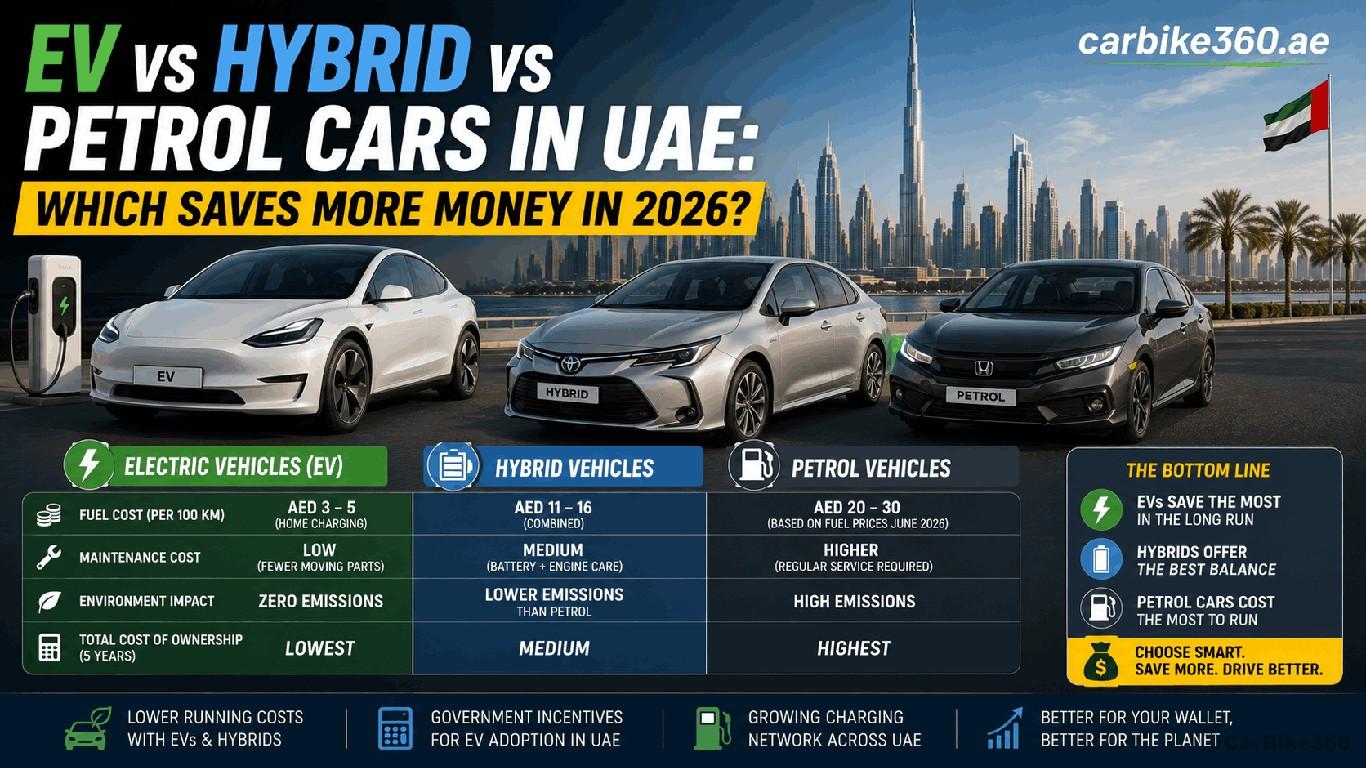
EV vs Hybrid vs Petrol Cars in UAE: Which Saves More Money in 2026?
Compare EVs, hybrids, and petrol cars in the UAE. Discover which vehicle type offers the lowest running costs, best fuel savings, maintenance benefits, and long-term value in 2026.
21-Jul-2026 01:37 PM











Join Carbike360
Get Trending Updates


UAE’s Fastest Growing Vehicle Marketplace