Discover the BMW 5 Series and M5: A History of Evolution and Diverse Models






For decades, the BMW 5 Series has been synonymous with luxury, performance, and cutting-edge technology. Since its debut in 1972, this midsize luxury sedan has consistently redefined the standards in its category.
Through the years, every new iteration has introduced innovations, design improvements, and driving dynamics, establishing the BMW 5 Series as a benchmark in the automotive industry. This legacy even gave rise to the legendary BMW M5. In this DubiCars Car Spotlight feature, we explore the history and evolution of the BMW 5 Series.
First Generation (E12) | 1972 – 1981
The narrative of the BMW 5 Series commences with the debut of the E12 generation in 1972. Crafted to succeed the smaller yet prosperous BMW New Class sedans, it showcased a streamlined design that blended crisp lines with the distinctive kidney grille, resulting in a sophisticated yet sporty appearance.

Beyond its aesthetic appeal, the initial iteration of the 5 Series brought forth notable technological strides. These encompassed a four-link rear suspension, delivering enhanced handling and comfort. The E12 model of the BMW 5 Series was propelled by a 1.8-liter inline-4 engine or a selection of inline-6 engines with capacities ranging from 2.0 to 3.5 liters.
Second Generation (E28) | 1981 – 1988
Expanding on the accomplishments of the E12, the E28 generation made its entrance in 1981, introducing additional refinement and innovation to the 5 Series. While maintaining the distinctive quad circular headlamp arrangement, the design progressed with sleeker lines and a focus on aerodynamics.

Highlighting BMW's dedication to performance, the E28 exemplified this commitment by introducing the M5 variant in 1985. The M5 quickly gained popularity, laying the foundation for subsequent high-performance models.
While maintaining the existing petrol engine choices, the E28 saw the introduction of a novel 2.4-liter diesel engine, marking its debut in this series. The M5 variant boasted a 256hp 3.5-liter inline-6 engine coupled with a 5-speed manual gearbox.
Third Generation (E34) | 1987 – 1996
In 1987, the E34 generation took the 5 Series to new heights with its emphasis on aerodynamics, safety, and advanced engineering. The design reflected a more rounded and aerodynamic profile, signaling the changing design trends of the late ’80s and early ’90s.

The E34 brought in innovations like stability control and traction control, elevating both safety and performance. In terms of engine options, it offered a variety, including the initial V8 engine in a 5 Series model. Despite this, the M5 continued to be propelled by an inline-6 engine, now generating 336hp.
Fourth Generation (E39) | 1995 – 2004
The E39 generation, introduced in 1995, is often regarded as a high point in the 5 Series history. With its sophisticated design and advanced technology, the E39 set new standards for luxury sedans. The exterior design featured a blend of elegance and athleticism, while the interior boasted a driver-oriented cockpit and high-quality materials.

The signature circular headlamps were replaced by sleek halogen units. The E39 was ahead of its time, introducing features such as satellite navigation, rain-sensing wipers, and a multi-function steering wheel.
The E39 BMW M5 was equipped with a 5.0-liter V8 engine, cementing the 5 Series' standing as a high-performance vehicle and earning acclaim among enthusiasts.
Fifth Generation (E60, E61) | 2003 – 2010
At the start of the 21st century in 2003, the E60 and E61 iterations of the 5 Series emerged, marking a departure from conventional design language with their sharper and more distinctive lines. While opinions on their design were divided, the E60 and E61 remained true to the 5 Series legacy of combining performance and innovation.

Technological progressions encompassed the introduction of the iDrive infotainment system, adaptive headlights, and active cruise control in the E60 generation. The E60 BMW M5, fueled by a high-revving V10 engine derived from Formula 1, emerged as a symbol of performance, showcasing BMW's dedication to pushing limits in the pursuit of driving enjoyment. Standard variants offered a selection of petrol and diesel engines.
Sixth Generation (F10, F11, F07, F18) | 2009 – 2017
In 2009, the F10 generation signaled a shift back to a more conservative design philosophy, addressing certain criticisms directed at its forerunner. The F10 exhibited a subdued yet refined exterior, emphasizing aerodynamics and efficiency.
The F10 generation embraced fuel efficiency by introducing the ActiveHybrid 5 model, incorporating a hybrid powertrain. Furthermore, enhancements in connectivity and driver assistance systems, including features like lane departure warning and night vision, added another layer of sophistication to the 5 Series.

The sixth generation of the BMW 5 Series came in various body types, with the sedan identified as F10, the Touring as F11, the Gran Turismo as F07, and the long-wheelbase sedan as F18. The M5 of this generation was equipped with a turbocharged V8 engine generating 553hp.
Seventh Generation (G30, G31, G38) | 2016 – 2023
Unveiled in 2016, the G30 generation perpetuated the 5 Series legacy, emphasizing performance, luxury, and technological innovation. The exterior design showcased streamlined lines and a distinctive kidney grille.
Demonstrating BMW's dedication to lightweight construction, the G30 utilized aluminum and high-strength steel to improve both performance and fuel efficiency. The interior of the G30 boasted cutting-edge technology, including the latest version of the iDrive system, gesture control, and semi-autonomous driving capabilities.
The G30 BMW M5, incorporating an M xDrive all-wheel-drive system, showcased the 5 Series' ability to provide thrilling performance without compromising everyday usability. This generation's M5 boasted a twin-turbo 4.4-liter V8 engine, generating an impressive 617hp.
Eighth Generation (G60, G61, G68) | 2023 – Present
The latest member of the 5 Series family, the G60 generation, was introduced in 2023. Evolving from its forerunners, the G60 persisted in enhancing the design, performance, and technology of the 5 Series. The exterior adopts a contemporary and dynamic look, prioritizing aerodynamics and visual allure.

Beneath the hood, the G60 offered a variety of powertrain options, encompassing conventional combustion engines, hybrid choices, and electric variants, by the industry's move towards electrification. The interior upheld the legacy of luxury and innovation, incorporating advanced driver-assistance systems, augmented reality displays, and an upgraded iDrive system.
Most Popular BMW 5 Series Generations In The UAE
In the UAE, the fifth, sixth, and seventh iterations of the BMW 5 Series stand out as the most favored among executive sedan enthusiasts. Meanwhile, classic car aficionados hold a special appreciation for the initial, second, third, and fourth generations of the 5 Series.
Also Read: The Evolution and Models of Volkswagen Golf Throughout Its History
More Articles
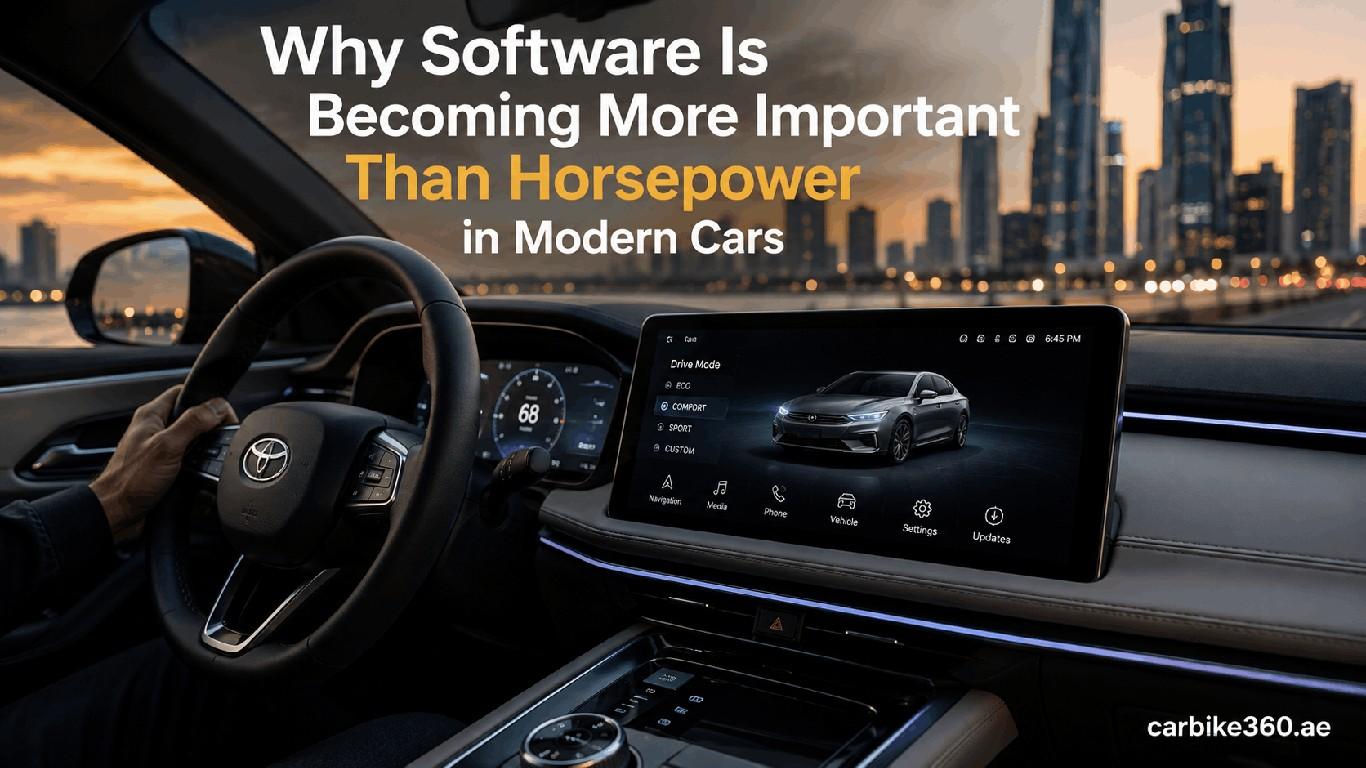
Why Software Is Becoming More Important Than Horsepower in Modern Cars
Discover why software is transforming the automotive industry in 2026. Learn how AI, connected features, over-the-air updates, and software-defined vehicles are becoming more important than horsepower.
12-Aug-2026 01:12 PM
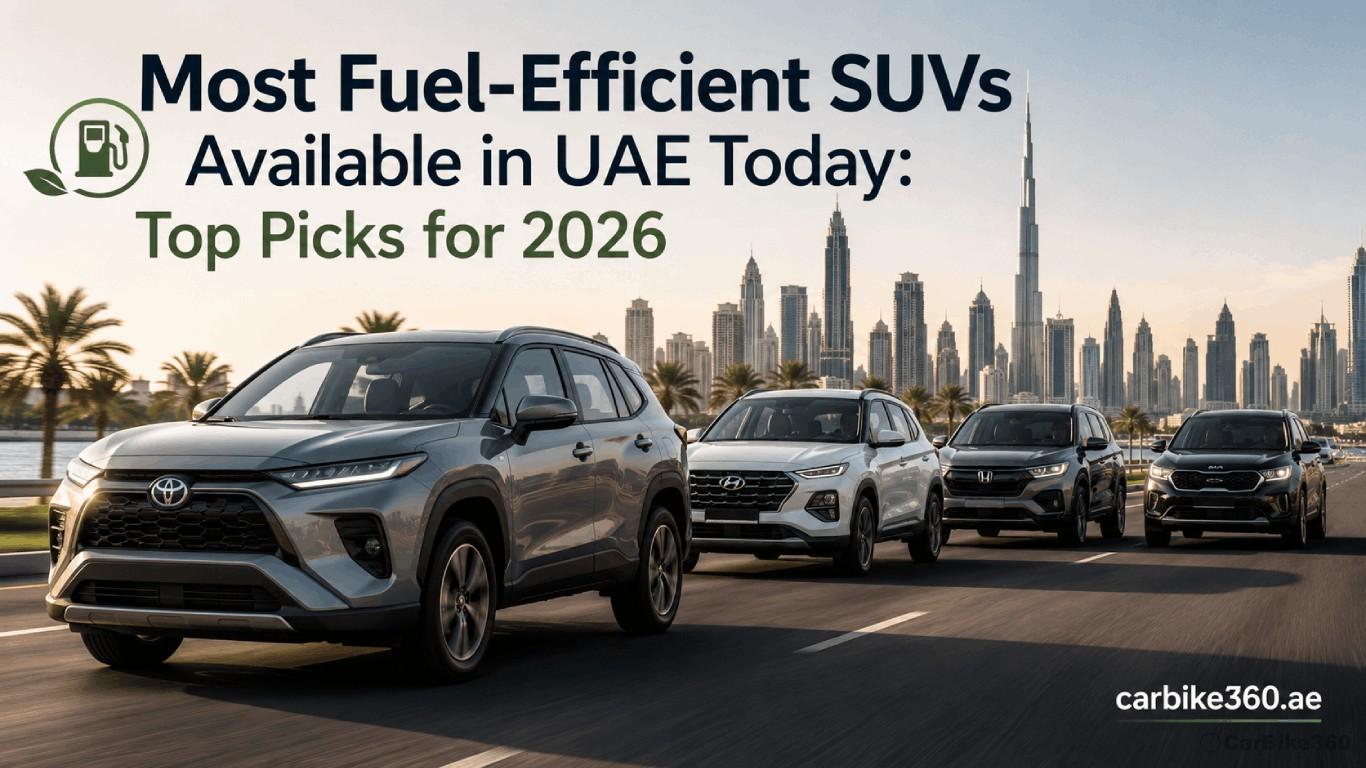
Most Fuel-Efficient SUVs Available in UAE Today: Top Picks for 2026
Discover the most fuel-efficient SUVs available in the UAE in 2026. Compare hybrid and petrol models including Toyota RAV4 Hybrid, Corolla Cross Hybrid, Nissan Kicks, Hyundai Creta, Kia Seltos, and more.
11-Aug-2026 12:58 PM
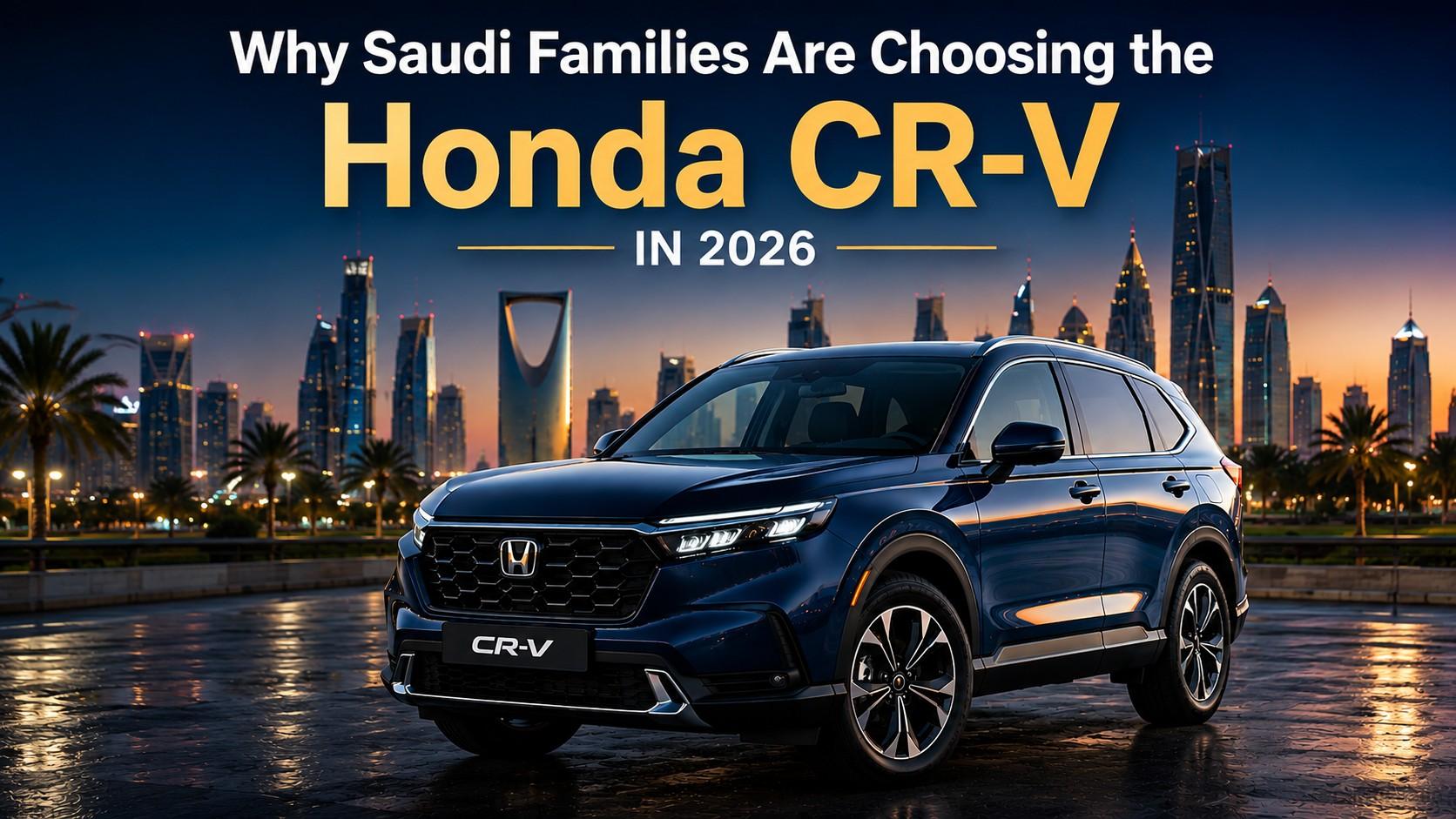
Honda CR-V Saudi Arabia: Why Thousands of Families Are Choosing It in 2026
The 2026 Honda CR-V combines spacious seating, advanced safety, efficient performance, and premium comfort, making it one of the most practical family SUVs available in Saudi Arabia.
28-Jul-2026 06:06 AM
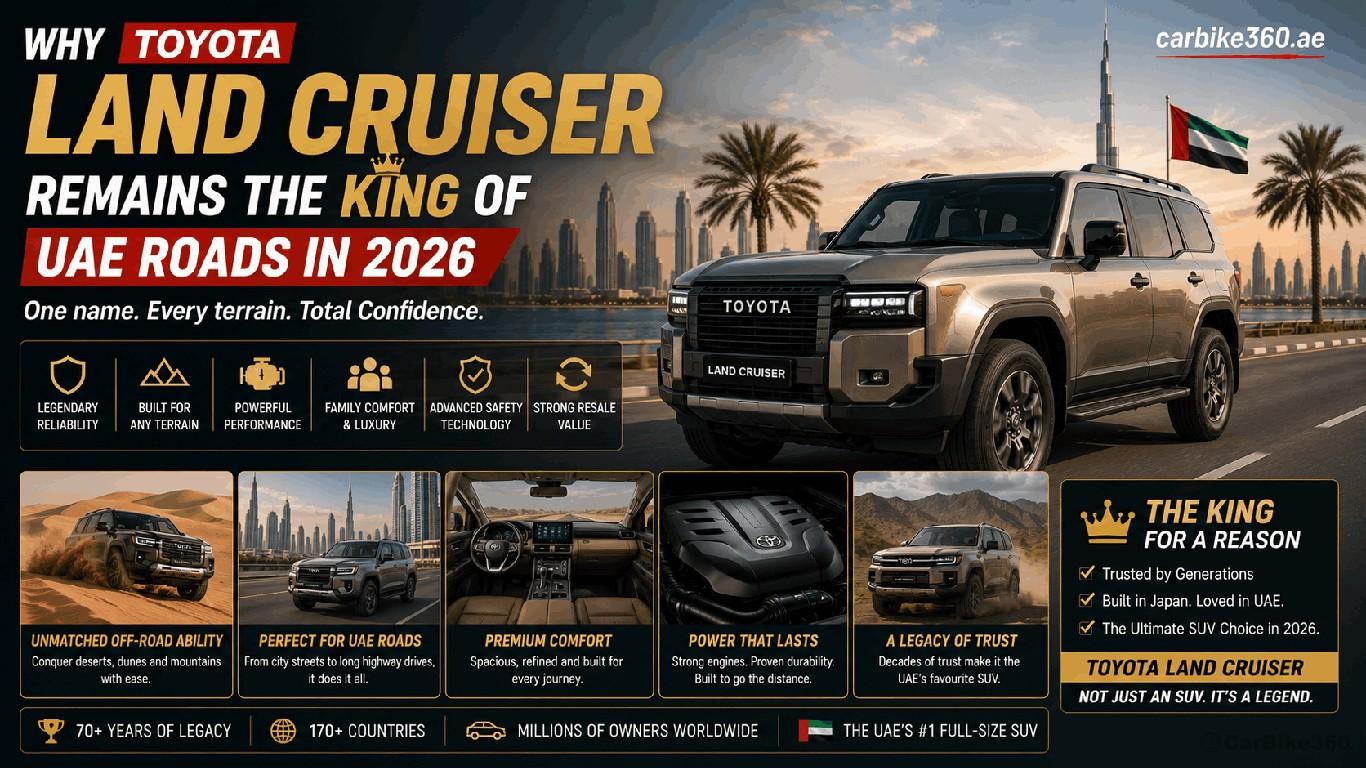
Why Toyota Land Cruiser Remains the King of UAE Roads in 2026
Discover why the Toyota Land Cruiser continues to dominate UAE roads in 2026. Explore its reliability, off-road capability, family-friendly features, resale value, and enduring popularity across the Emirates.
27-Jul-2026 09:54 AM
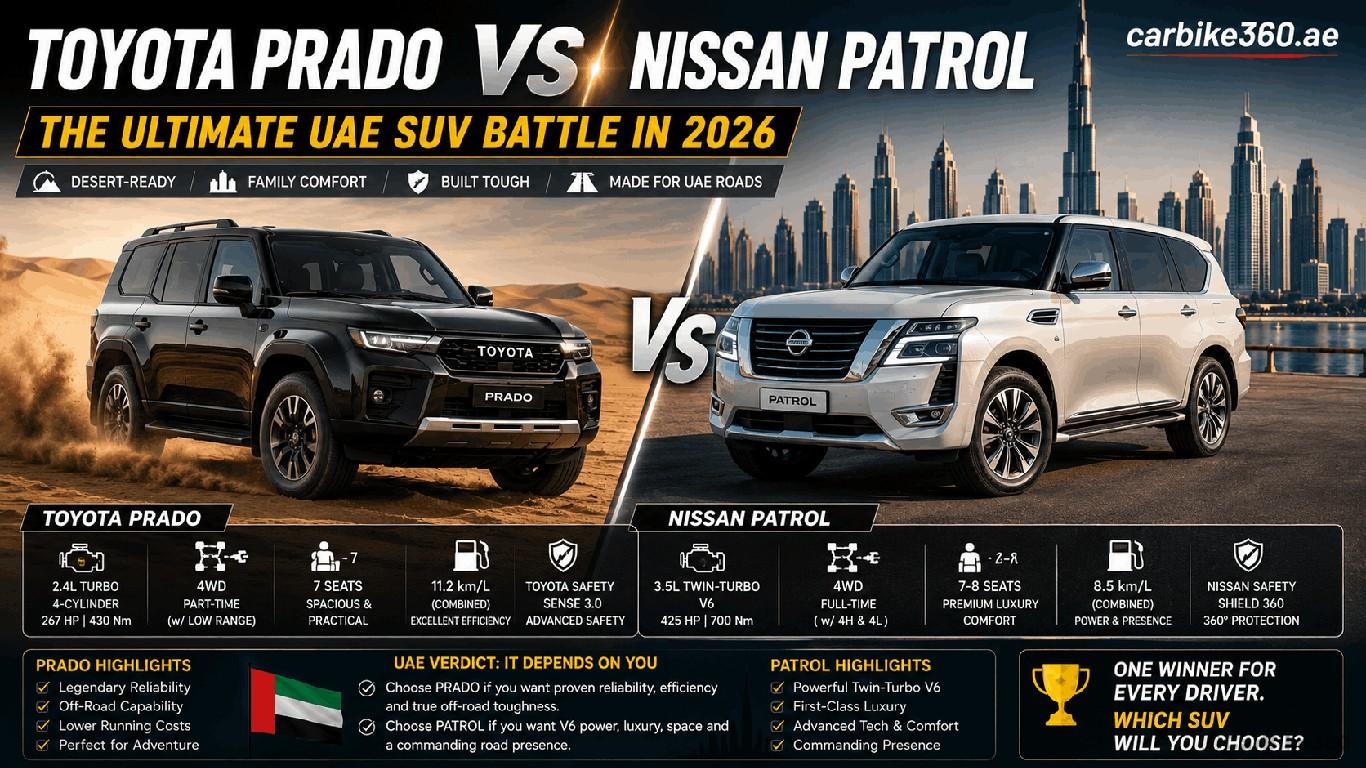
Toyota Prado vs Nissan Patrol: The Ultimate UAE SUV Battle in 2026
Toyota Prado or Nissan Patrol? Compare performance, off-road capability, luxury, fuel economy, resale value, and ownership costs to find the best SUV for UAE families in 2026.
24-Jul-2026 12:44 PM
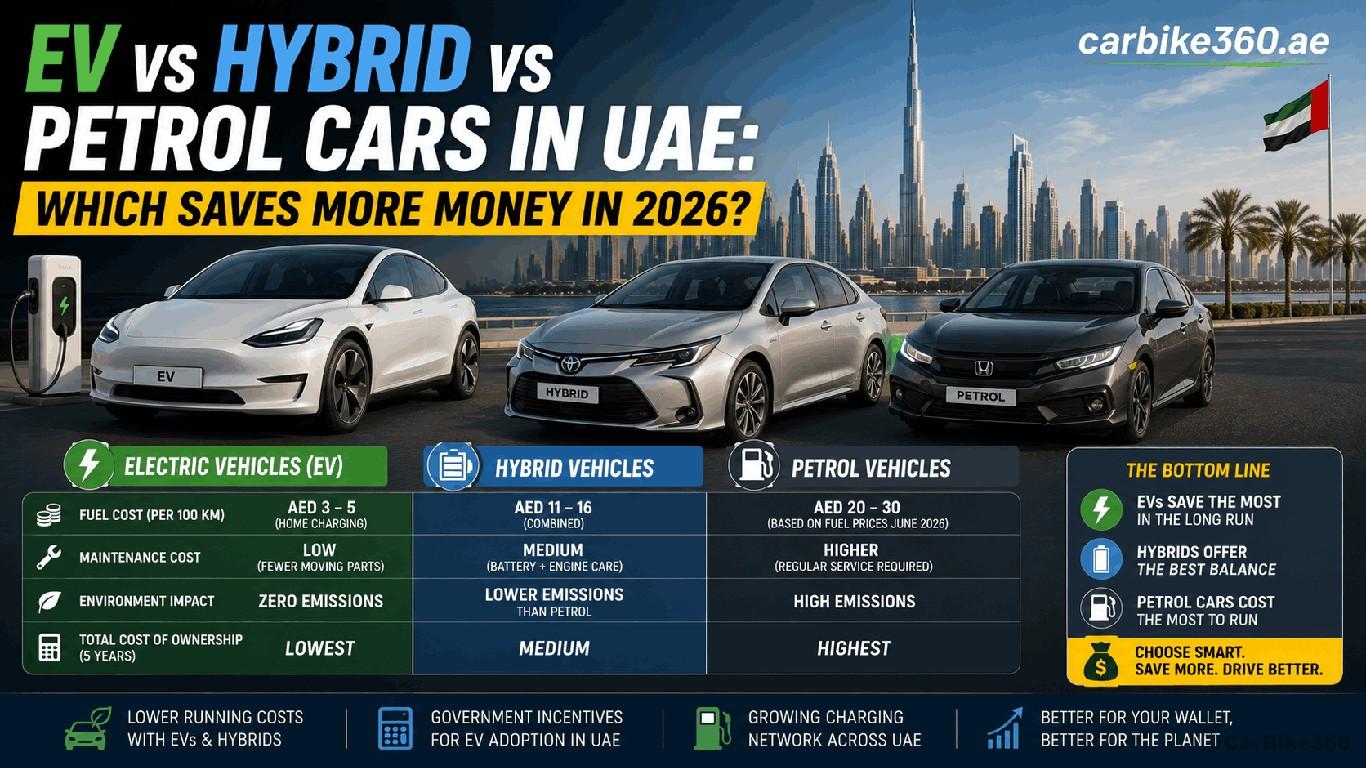
EV vs Hybrid vs Petrol Cars in UAE: Which Saves More Money in 2026?
Compare EVs, hybrids, and petrol cars in the UAE. Discover which vehicle type offers the lowest running costs, best fuel savings, maintenance benefits, and long-term value in 2026.
21-Jul-2026 01:37 PM





Join Carbike360
Get Trending Updates


UAE’s Fastest Growing Vehicle Marketplace